HÉRITAGE MONTRÉAL
Make a donation to Héritage Montréal
A guide to giving · All amounts in Canadian dollars
Give Montréal’s heritage a future
Since 1975, Héritage Montréal has raised public awareness, supported communities and engaged decision-makers to help the places that tell our stories endure. Your donation helps preserve their beauty, their stories and their place in a more sustainable city, today and for generations to come.
One-time or monthly donation · Secure payment
Héritage Montréal is a registered charity. An official tax receipt will be issued for every eligible donation. All amounts shown are in Canadian dollars.
How would you like to give?

One-time donation
Make a difference today by supporting our mission.


Gift of publicly traded shares
Put the securities you hold to work for Montréal’s heritage.

Gift in your will
Leave a lasting expression of your connection to Montréal.
Did you know?
First large cultural donation
An additional 25% tax credit
Your first large cultural donation may qualify for an additional Québec tax credit of 25%, on top of the usual donation tax credits. It applies to an eligible cash donation of $5,000 to $25,000 and can be claimed once in a lifetime, subject to the applicable conditions.
Did you know?
Gifts of publicly traded shares
A tax advantage on capital gains
Giving publicly traded shares directly may offer tax advantages compared with selling them and donating the proceeds. Certain securities qualify for a zero capital gains inclusion rate when calculating regular income tax, subject to conditions. Speak with our advisor before proceeding.
One-time donations: every gift matters
A donation of $25, $50, $100 or an amount of your choice helps raise awareness of and advocate for Montréal’s heritage.
In the secure donation form, select the one-time donation option and enter the amount you wish to give.
Monthly donations: support our mission over time
By giving monthly, you provide Héritage Montréal with steady support that helps us plan our awareness, community engagement and advocacy activities.
Choose an amount that fits your budget. In the secure donation form, select the monthly donation option.
Why give?
- Celebrate heritage and its beauty: develop accessible programs, educational activities and resources that help people understand the architecture, landscapes and places that shape Montréal.
- Engage communities: provide tools and expertise to residents, property owners and local communities.
- Advocate for the places that bring us together: engage decision-makers to preserve their beauty, their history and their contribution to the quality of our neighbourhoods.
- Support a more sustainable city: promote the conservation, rehabilitation and requalification of existing buildings to extend their life, reduce material waste and make heritage part of the environmental transition.
Major gifts: deepen your commitment
Considering a gift of $5,000 or more? Our advisor would be pleased to discuss what inspires you and how you would like to support our mission.
What your support can make possible
- $5,000: support awareness activities for members of our Next Generation Committee.
- $10,000: help train our volunteer guides.
- $25,000: support our Policy Department’s work to protect heritage buildings.
These examples illustrate what your generosity can make possible. Your gift supports Héritage Montréal’s overall mission and helps us respond where the need is greatest.
Your first large cultural donation
Québec offers a special tax incentive for a first large cultural donation. It can be claimed only once in a lifetime. At its full potential, the incentive means that close to 78% of your donation is covered by the two levels of government.
In the example below, a $25,000 donation has a net cost to you of approximately $5,500, while providing Héritage Montréal with the full $25,000.
What your donation actually costs you
On a small screen, scroll the table horizontally to compare the three amounts.
| Your donation | $5,000 | $10,000 | $25,000 |
|---|---|---|---|
| Donation tax credits | $2,622.02 | $5,287.27 | $13,283.02 |
| Additional Québec tax credit (25%) | $1,250.00 | $2,500.00 | $6,250.00 |
| Net cost to you | $1,127.98 | $2,212.73 | $5,466.98 |
Illustrative example based on 2026 tax parameters for an individual residing in Québec with taxable income above $258,482. At a lower taxable income, the net cost of a $25,000 donation would instead be between $6,295 and $6,729. Conditions apply. This information is not tax advice: please review your situation with your accountant.
How to give
- Make a personal cash donation of $5,000 to $25,000, in one payment or several payments within the same calendar year.
- The additional credit for a large cultural donation can be claimed only once, across all eligible organizations. The maximum benefit from this credit is reached with an eligible donation of $25,000.
- Your spouse has their own eligibility. A couple may therefore make two first-time donations if each person meets the conditions.
- Your donation must be received by December 31 to be claimed on your tax return for that year.
Considering this type of gift? We would be happy to discuss it with you. We also encourage you to consult your accountant or tax advisor to confirm your eligibility and choose the amount that works for you. Read Revenu Québec’s information about donation tax credits.
Gifts of publicly traded shares
Investments that have grown in value can also help shape Montréal’s future. By giving eligible securities directly to Fondation Héritage Montréal, you support its overall mission of raising awareness, engaging communities and advocating for heritage.
Two advantages to discuss with your specialist
- Favourable capital gains treatment: a direct gift of eligible securities may qualify for a zero inclusion rate when calculating regular income tax. Selling the securities yourself before donating the proceeds leads to a different calculation.
- A donation receipt: the eligible amount is determined under the tax rules, based on fair market value at the time of the gift and taking into account any advantage received. It may qualify for donation tax credits.
Example: giving $25,000 in value
You hold shares in a non-registered account with an adjusted cost base of $5,000 and a value of $25,000. Here are two ways to make a gift of the same value, with a capital gain of $20,000.
On a small screen, scroll the table horizontally to compare the two ways of giving.
| Comparison | Sell the shares, then donate $25,000 | Donate the shares directly |
|---|---|---|
| Value of the securities | $25,000.00 | $25,000.00 |
| Adjusted cost base | $5,000.00 | $5,000.00 |
| Capital gain | $20,000.00 | $20,000.00 |
| Portion of the gain included in income | $10,000.00 (50%) | $0.00 (0%) |
| Regular income tax on the gain | $5,330.50 | $0.00 |
| Eligible amount of the gift | $25,000.00 | $25,000.00 |
| Donation tax credits | $13,283.02 | $13,283.02 |
| Illustrative net cost to you | $17,047.48 | $11,716.98 |
Calculation assumptions — Québec, 2026: an individual with taxable income of $300,000 before the transaction, no other donations claimed in the year, no advantage received, and eligible securities held outside a registered plan. Combined marginal tax rate of 53.305%; capital gains inclusion rate of 50% on a sale and 0% on a direct gift, for regular income tax purposes. Combined donation credits calculated at 31.69% on the first $200 and 53.305% on the remaining $24,800, taking the Québec abatement into account. Sufficient tax payable to use the credits in full.
How to read the net cost: value donated + tax on the gain − donation tax credits. In the “sell, then donate” column, the donation remains $25,000: tax on the gain is paid using other available funds. Calculations are rounded to the nearest cent. Brokerage fees, other deductions and credits, and alternative minimum tax are excluded; alternative minimum tax may affect the actual benefit.
The additional 25% credit for a first large cultural donation is not included in this comparison. It requires an eligible cash donation and does not apply to a transfer of securities. If you qualify, ask your tax specialist to compare the two options, taking into account the first large cultural donation table above.
Which investments could be considered?
In addition to shares listed on a designated stock exchange, certain listed bonds, exchange-traded funds and mutual fund units may qualify. Their nature and acceptance must be confirmed with our advisor before you proceed. Private company shares and investments held in an RRSP or RRIF require a separate assessment.
How to prepare your gift of shares
- Speak with our advisor. Tell us the type of securities and the approximate value of your intended gift so we can confirm acceptance and the arrangements for receiving it.
- Consult your broker and tax specialist. Have them review the adjusted cost base, the accrued gain and the consequences of the gift, including alternative minimum tax.
- Obtain the transfer instructions. Once the gift is accepted, our advisor will provide the information to give to your financial institution.
- Arrange the transfer and let us know. Provide the information needed to identify your gift. Receipt of the securities and the eligible value will be verified so that an official donation receipt can be prepared.
Hoping to give before year-end? Contact our advisor well in advance to ask about processing times and the deadline for receiving your gift. The value of the securities may change during the transfer.
Tax information: CRA — gifts of securities · CRA — gifts and income tax · Income tax rates · Revenu Québec — donation tax credits. This example is for illustration; review it in light of your own circumstances.
Gifts in your will and planned giving: share your connection to Montréal
By including a gift to Fondation Héritage Montréal in your will, you make a lasting contribution to what makes our city unique: its architecture, history, landscapes and heritage.

Planning a gift also means thinking about the Montréal we want to pass on. Your contribution supports Héritage Montréal’s overall mission: raising awareness of heritage, engaging communities and advocating for the places that tell our stories. With your specialists, you can arrange this gift during your lifetime or through your estate, taking your loved ones and financial circumstances into account.
Choose a form of giving that suits your circumstances
The options below should be considered with your notary and your financial, tax or insurance specialists. Our advisor must confirm acceptance of the gift and its terms before any transaction or specific commitment is made.
A bequest for Montréal’s future
Your will can leave a sum of money, a percentage of your estate or a specific asset to Fondation Héritage Montréal. The wording should reflect your other wishes and the rules that apply to settling your estate.
- A specific amount or asset: identify what you would like to leave.
- A share of your estate: specify a percentage that will change with the value of your assets.
- All or part of the residue: your notary can draft a bequest covering what remains after obligations and other applicable provisions have been addressed.
Preparing your bequest
- Review your assets, commitments and the needs of your loved ones.
- Discuss the type of bequest and its wording with your notary.
- Check with our advisor what information your notary needs to correctly identify Fondation Héritage Montréal.
- If you wish, let us know about your plans so that we can thank you.
Tax considerations: an eligible gift made by an estate may qualify for a tax credit. How it can be used depends in particular on the timing of the transfer and estate tax rules; your liquidator and tax specialist can determine the appropriate treatment.
A gift today, a bequest for the future
You can combine a gift now with a planned gift for later. For example, one-time or monthly support can accompany a bequest in your will; a transfer of securities can also form part of a broader plan.
- Determine how much you can give today while maintaining your financial security.
- Review the form and timing of your future gift with your specialists.
- Discuss with our advisor how these contributions fit together and what arrangements are needed.
Tax considerations: each contribution has its own eligibility requirements, completion date and receipting rules. Combining them does not create a separate tax credit.
Include Héritage Montréal in your life insurance plans
Life insurance may be considered as part of your giving plans. The consequences differ depending on whether you retain ownership of the policy or transfer it to an organization that agrees to become its owner.
- Naming a beneficiary: discuss with your insurer the possibility of naming Fondation Héritage Montréal to receive all or part of the death benefit.
- Transferring a policy: an existing or new policy may be considered for transfer, subject to acceptance and its future obligations.
- Compare the scenarios with your insurance and tax specialists.
- Ask our advisor to confirm whether the policy can be accepted and what arrangements apply to premiums.
- Ask your insurer to prepare the appropriate documents and have the consequences of changing the owner or beneficiary reviewed.
Tax considerations: an eligible policy transfer and certain premiums may qualify for donation receipts. The eligible value is not necessarily the insured amount: fair market value and cost rules must be examined. If the organization instead receives the death benefit as a named beneficiary, specific estate donation rules apply.
Give securities to support heritage
Certain securities can be transferred directly to a charity. The choice of securities, timing of the transfer and acceptance should be arranged with your broker and our advisor.
- Have your specialist review the securities and their tax treatment.
- Obtain confirmation of acceptance and transfer instructions before proceeding.
- Provide our advisor with the information needed to identify the transfer and prepare the receipt.
Tax considerations: a direct gift of eligible securities may qualify for a zero capital gains inclusion rate and a donation tax credit, subject to applicable conditions. Selling the securities and donating the proceeds may produce a different result. A bequest of securities must also be reviewed as part of your estate planning.
Read about the arrangements for giving publicly traded shares.
RRSPs and RRIFs: plan how your savings will be passed on
You can explore leaving some or all of an RRSP or RRIF as a charitable gift at death. In Québec, how you put this intention into effect depends in particular on the contract and the rules governing beneficiary designations and estates.
- Ask your notary and financial institution which approach is appropriate for your plan.
- Have the tax liability associated with the plan and the consequences for your loved ones estimated.
- Check with our advisor what arrangements and documents are required to receive the gift.
Tax considerations: an eligible gift may generate a tax credit whose use must be coordinated with the tax returns of the deceased and the estate. Do not assume that the credit will automatically offset all tax associated with the RRSP or RRIF.
Giving property: talk to us before transferring it
A gift in kind is a gift of property. Its relevance to Héritage Montréal, its condition, ownership rights and any associated costs must be assessed before acceptance. Contact us before making arrangements to donate documents, objects, artworks or other property.
- Describe the property and the rights you hold.
- Ask our advisor to confirm whether the gift can be considered.
- Arrange an appropriate appraisal where needed and agree on the terms of the transfer.
Tax considerations: the eligible receipt amount depends on the applicable valuation rules. A transfer may also trigger a capital gain. The special rules for certified cultural property require specific conditions and designations: they do not automatically apply to property of heritage interest.
Help Héritage Montréal continue its work
Your contribution can help Héritage Montréal continue its work over the years. Tell us when you would like to give and what form of support you are considering. If an endowment arrangement can be explored, its operation, minimum amounts, fees and duration must be clarified with our advisor. The gift remains a contribution to the organization’s overall mission.
Plan your gift at your own pace
- Take stock: decide what you would like to pass on, taking your needs and those of your loved ones into account.
- Consult your specialists: a notary, accountant, financial advisor or insurer, depending on the gift you are considering.
- Discuss your plans with us: our advisor will explain how the gift can be received and what documents are needed; a written agreement may be prepared where the nature of the gift calls for one.
- Formalize and review: have the required documents prepared and revisit your plans as your circumstances change.
Frequently asked questions about planned giving
Why plan a gift to Héritage Montréal?
Because Montréal’s places are part of our shared history. Planning a gift helps Héritage Montréal continue to raise awareness of these places and advocate for them alongside residents and communities. Your support contributes to all of this work.
When can I start planning?
Giving plans can take shape at different stages of life: the start of a career, changes in family circumstances, later career years or retirement. A monthly gift can accompany a future intention; a will, insurance or investments can then be considered according to your needs. Review your plans when significant life changes occur.
How can I provide for my loved ones?
Discuss your obligations and your family’s needs with your notary and specialists. They can consider a specific sum, a percentage or a residuary bequest in light of your entire estate and your wishes.
What tax benefits may apply?
Eligible gifts may qualify for tax credits. Certain securities transfers receive special capital gains treatment; estate gifts and insurance are subject to other rules. The receipt date, limits, and options for allocating or carrying forward credits must be reviewed for your circumstances. These arrangements should not be confused with the additional credit specifically available for a first large cultural donation.
What will my gift support?
Your gift supports Héritage Montréal’s overall mission. It helps give the organization the resources to continue raising awareness, engaging communities and advocating for Montréal’s heritage, according to its needs.
Can I consider an endowment fund or a life annuity?
These arrangements require a separate assessment. An endowment may provide lasting support under agreed terms. A charitable annuity may combine donated capital with payments to the donor, but setting one up depends on the recipient’s status and specific requirements. Ask our advisor which options can be explored with your insurer or other specialists; their availability at Héritage Montréal must be confirmed.
How will my planned gift be recognized?
If you have already included a bequest in your will, you can let us know so that we can thank you and understand what inspires you. Please also share your privacy preferences. Together, we can agree on a way to recognize your gift that respects your wishes.
What costs should I expect when planning my gift?
Ask your notary, insurer or financial institution about the professional fees and other costs associated with the steps you are considering. Our advisor can explain the arrangements for receiving your gift and, where applicable, any fees associated with a particular management arrangement.
Who can help me, and how can I contact you?
Our advisor can discuss your intentions and the arrangements for receiving your gift. Your notary and specialists can advise you on legal, financial and tax matters. Write to philanthropie@heritagemontreal.org.
Learn more about gifts in your will and planned giving
Would you like to explore an option, ask a question or tell us about a gift you have already planned? Contact our advisor at philanthropie@heritagemontreal.org.
Information for your notary:
Fondation Héritage Montréal
1015, rue Bélanger, Montréal (Québec) H2S 1H1
Québec enterprise register (REQ) — Québec enterprise number (NEQ): 1143781012
Charitable registration number: 118923218RR0001.
Have you already included a gift in your will? Let us know. We would love to hear what inspires you and thank you personally for this gift to the future.
This information outlines general options. Acceptance of the gift and its consequences must be confirmed for your plans with our advisor and your specialists.
Official information: gifts and estates · gifts of life insurance policies · gifts and income tax.
Your support as part of our revenue
In 2025, donations and membership dues accounted for 49% of our revenue. Your support plays an essential role in funding our operations and programs.
- Donations and membership dues49 %
- Government funding26 %
- Other revenue25 %
Prefer to give by cheque?
Make your cheque payable to Fondation Héritage Montréal and mail it to:
Fondation Héritage Montréal
1015, rue Bélanger
Montréal (Québec) H2S 1H1
Questions about your gift?
Write to philanthropie@heritagemontreal.org. We would be happy to discuss the giving option that works for you.
Québec enterprise register (REQ) — Québec enterprise number (NEQ): 1143781012
Charitable registration number: 118923218RR0001.
The tax information provided is general in nature. Potential benefits depend on your circumstances and the rules in effect when you make your gift.
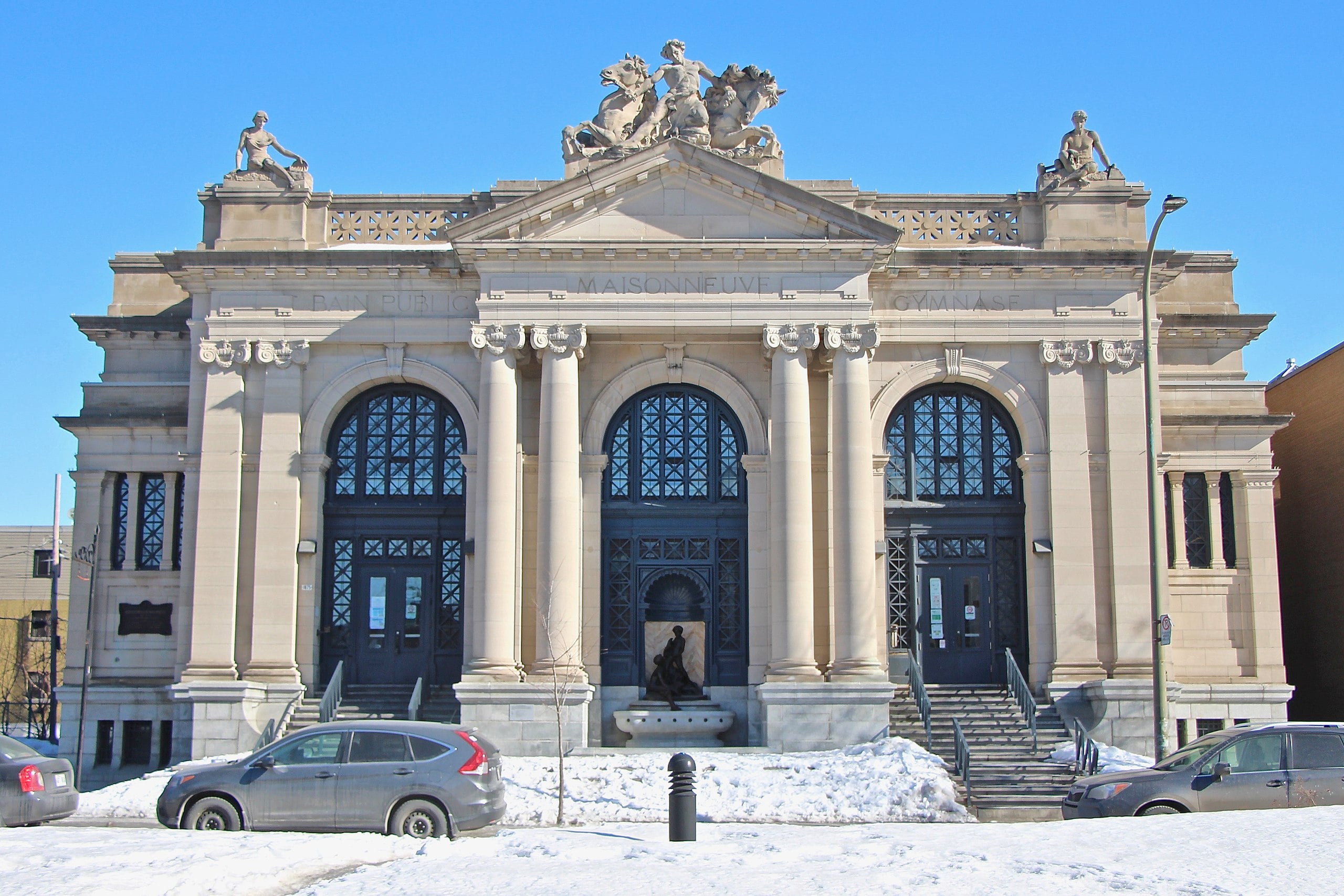
Photos — Bain Morgan: Thomas1313 / Wikimedia Commons, CC BY-SA 4.0; Le 9e Eaton
