

Following alerts received in early 2026, Héritage Montréal sought to understand how the remarkable interior of the former Banque d’épargne de la cité et du district de Montréal, at the corner of Sainte-Catherine West and McGill College, had been completely demolished to make way for a sportswear store. We met with representatives of the arrondissement de Ville-Marie as well as the Director of Real Estate for Canada for this international retail chain.
The loss of this heritage interior is all the more troubling because, since the 1990s, the Ville de Montréal had assured us that its preservation was one of the conditions attached to the development agreement authorizing the office tower built in part above the former bank. Over the years, the interior had been carefully restored and sensitively adapted to accommodate new commercial uses.
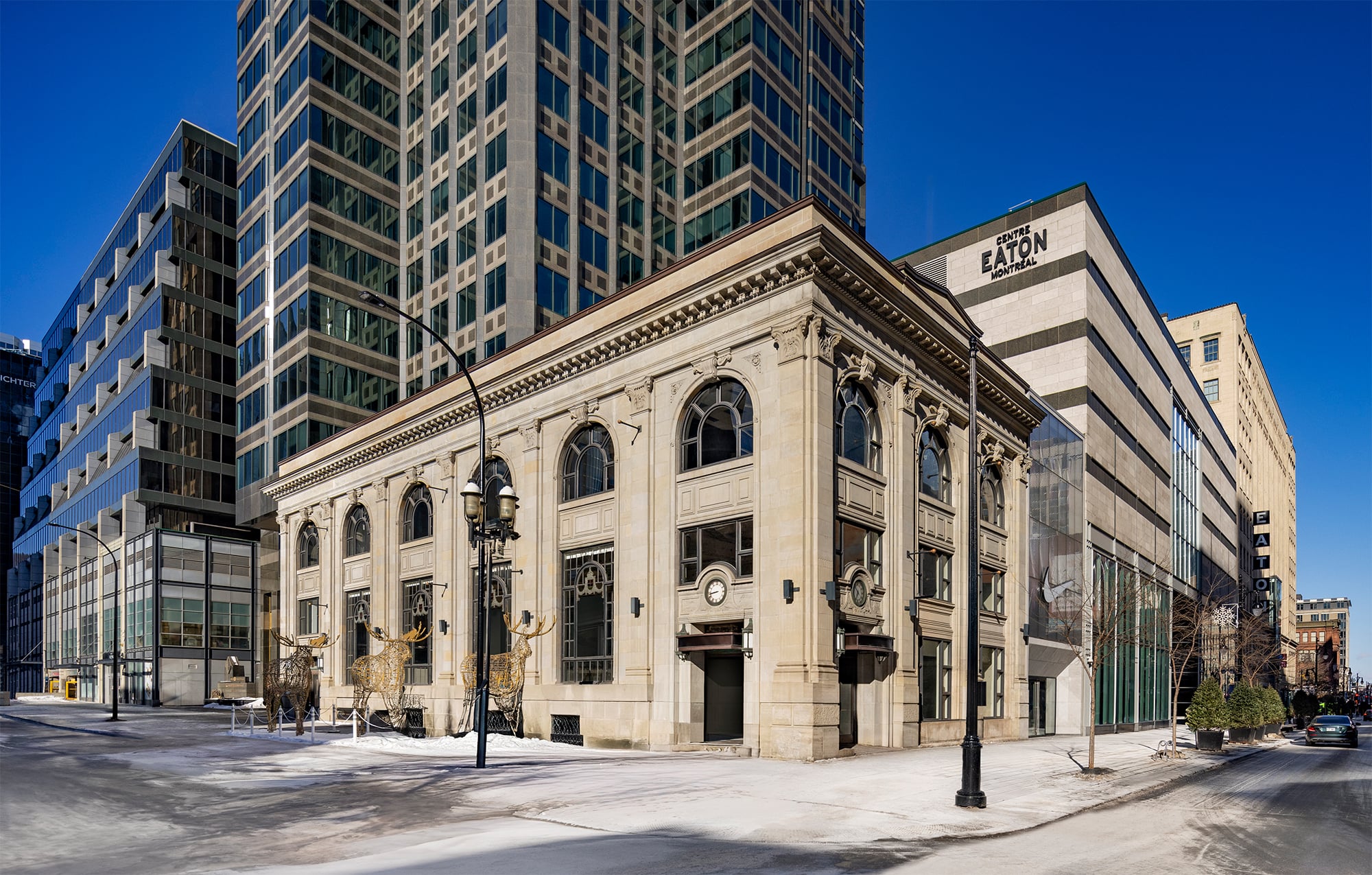
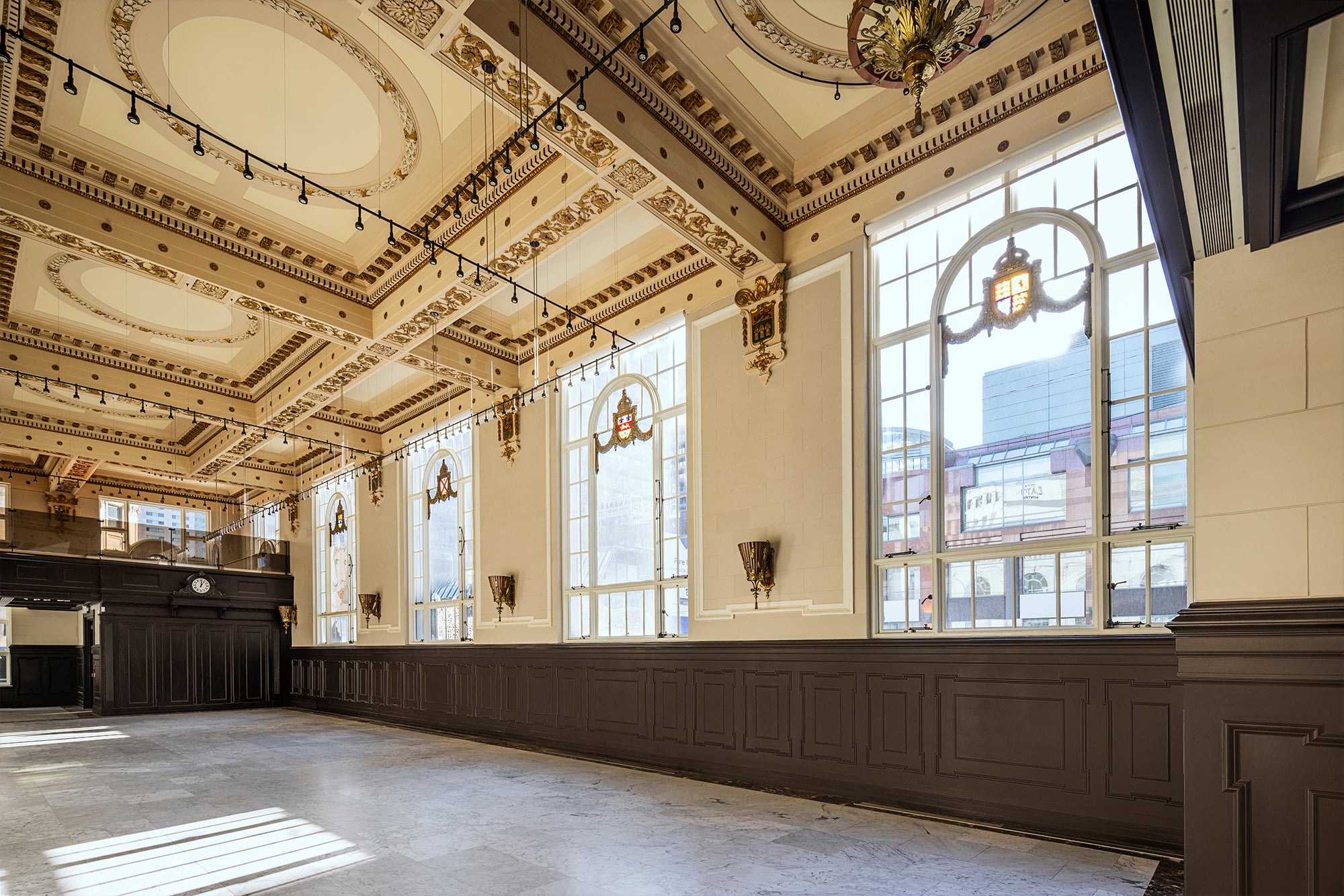
The Ville de Montréal (arrondissement de Ville-Marie) met with us promptly and explained that the new retail project had been approved in accordance with the applicable regulations, and that no record could be found of the conservation commitments made in the 1990s. As for the tenant, it stated that it had received no indication that this 1920s interior presented any heritage issues, either from the real estate brokers involved in the transaction or from its architects.
On the one hand, this demolition demonstrates the need to move beyond vague commitments when it comes to recognizing and protecting heritage, particularly commercial interiors, and to adopt precautionary principles, if not binding regulations. On the other hand, it reveals that, even among professionals working within respected firms, there remains a lack of awareness—or perhaps indifference—toward heritage interiors, and possibly even a willful blindness in favour of corporate standards or fashionable designs that could just as easily be implemented anywhere.
In 2011, the Assemblée nationale du Québec granted municipalities certain powers to protect heritage interiors, responding to requests that the Ville de Montréal had been making since 1987. With the exception of a rare case in Westmount, these powers have remained largely unused, particularly by the Ville de Montréal. Just steps away from the Eaton 9e, a heritage interior that was preserved and brilliantly rehabilitated, the interior demolition at 777 Sainte-Catherine West must not go unanswered.
Héritage Montréal therefore calls on the Ville de Montréal to mandate its Conseil du patrimoine de Montréal to review this specific case and identify effective measures to prevent similar losses, ensure that heritage interiors are properly considered in the planning and evaluation of development projects, and promote their conservation, enhancement and adaptive reuse.