From September 12 to October 10, Héritage Montréal’s Next Generation Committee invited the next generation of heritage and planning professionals to reflect on the future of the former fort on Île Sainte-Hélène, home to the Stewart Museum until 2021, as part of the second edition of the Next Generation Competition for Ideas.
As the Parc Jean-Drapeau 2020-2030 Master Plan is being put into action, members of the Next Generation Committee (CORE) felt it was fitting to call on the next generation to submit innovative ideas to bring new life to this important Montreal military heritage site, located at the foot of the Jacques Cartier Bridge.
Once again, the next generation showed great creativity in imagining the future of a Montreal heritage site.
According to Nancy Elias and Gabriel Laferrière, co-chairs of the Next Generation Committee, the second edition of the Competition for Ideas was a great success.
“The enthusiastic response from the next generation and from our sponsors, the quality of the projects submitted, the reach of the public vote and the wonderful atmosphere at the closing and awards evening all pleasantly surprised us and motivate us for what comes next.”
Although participation was slightly lower than in the previous edition, held in 2020, “this edition nonetheless reaffirmed an essential quality of the Next Generation Committee’s charrette: its inclusiveness, which sets it apart from other competitions of its kind,” according to the co-chairs. “By offering open and varied themes, the charrette format attracts a diverse audience united by a passion for heritage, reaching emerging talent in architecture and landscape architecture as well as in urban design and environmental design. Since our goal is to offer the next generation in planning and design a flagship, stimulating annual event that showcases their ideas, we look forward to refining the competition and presenting the 2023 edition.”
Jury’s First Prize, sponsored by EVOQ Architecture: “Vocation primaire”
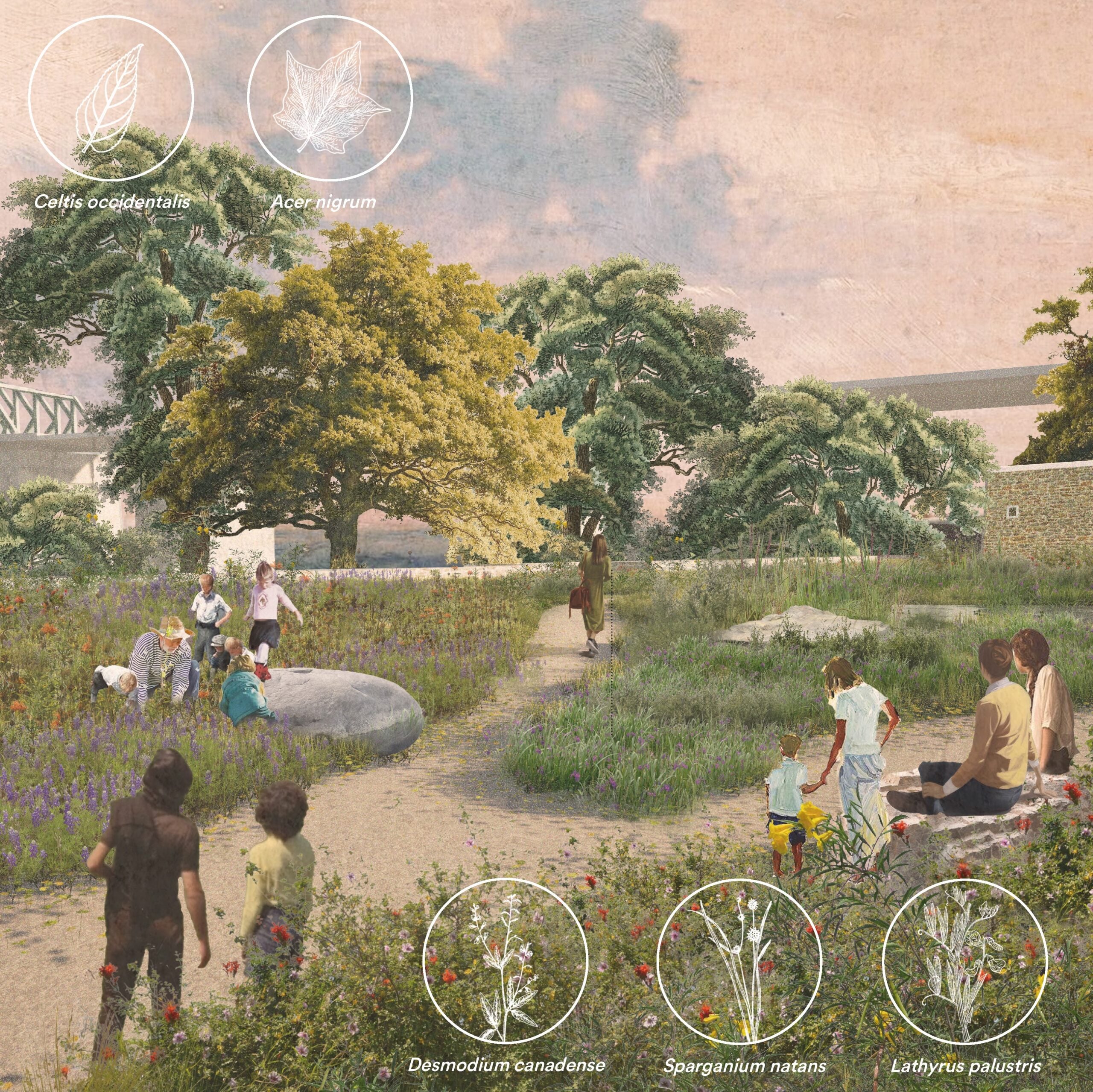
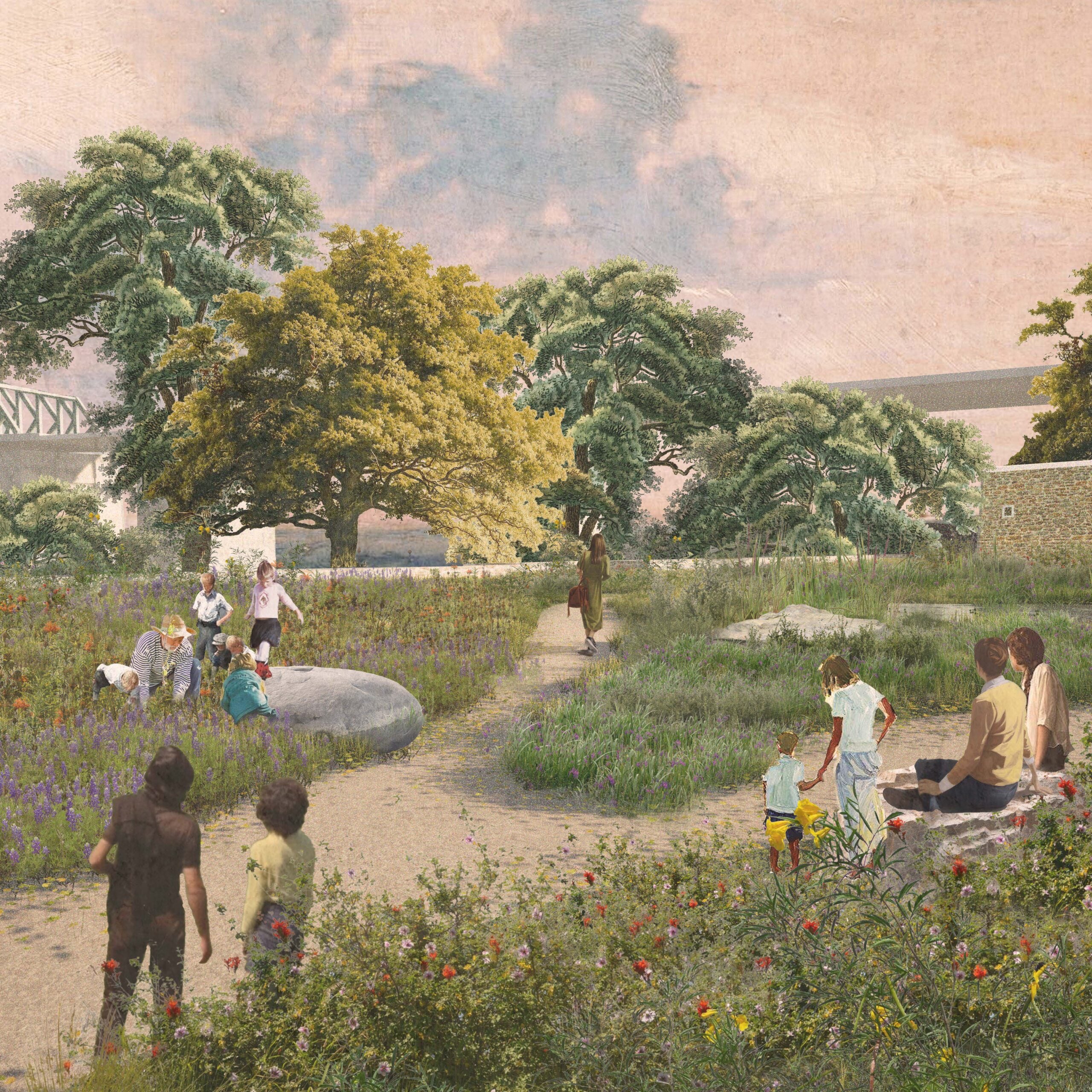
With a project rooted in preserving the history and essence of the site in order to respect its heritage character, Myriam Deragon and Étienne René-Contant propose transforming the former fort into an urban plant nursery. In addition to preserving and showcasing Quebec’s rich biodiversity and the exceptional ecosystem of Mont Boullé on Île Sainte-Hélène, the site would produce plants for Parc Jean-Drapeau and serve as a hub for action research that encourages knowledge transfer through interpretive trails and awareness workshops. With this intervention, the winning team turns the former fort into a fortress of urban biodiversity. The project also connects with the Campus de la transition écologique, the fort’s current occupant, and the neighbouring Biosphère, while meeting environmental objectives of the Parc Jean-Drapeau Master Plan.
Because the site is difficult to access, we felt it was essential to give it a very concrete purpose and to anchor it in the park’s larger project so that it could serve that broader goal. To preserve a building, it’s essential to give it a purpose. That was the big challenge: finding it a use, especially given its somewhat secluded position, set apart from the city. We wanted to propose a project that would help raise its profile among residents.
Myriam Deragon and Étienne René-Contant, First Prize winners
The jury appreciated the proposal as a whole and its alignment with the Master Plan’s objectives, as well as the quality of the narrative and presentation. Jury members also commended the team for its non-intrusive intervention, blending built and natural elements, conservation and transmission, which celebrates the built heritage while giving it a contemporary use.
Jury’s Second Prize, sponsored by Passerelles, coopérative en patrimoine: “La tablée”
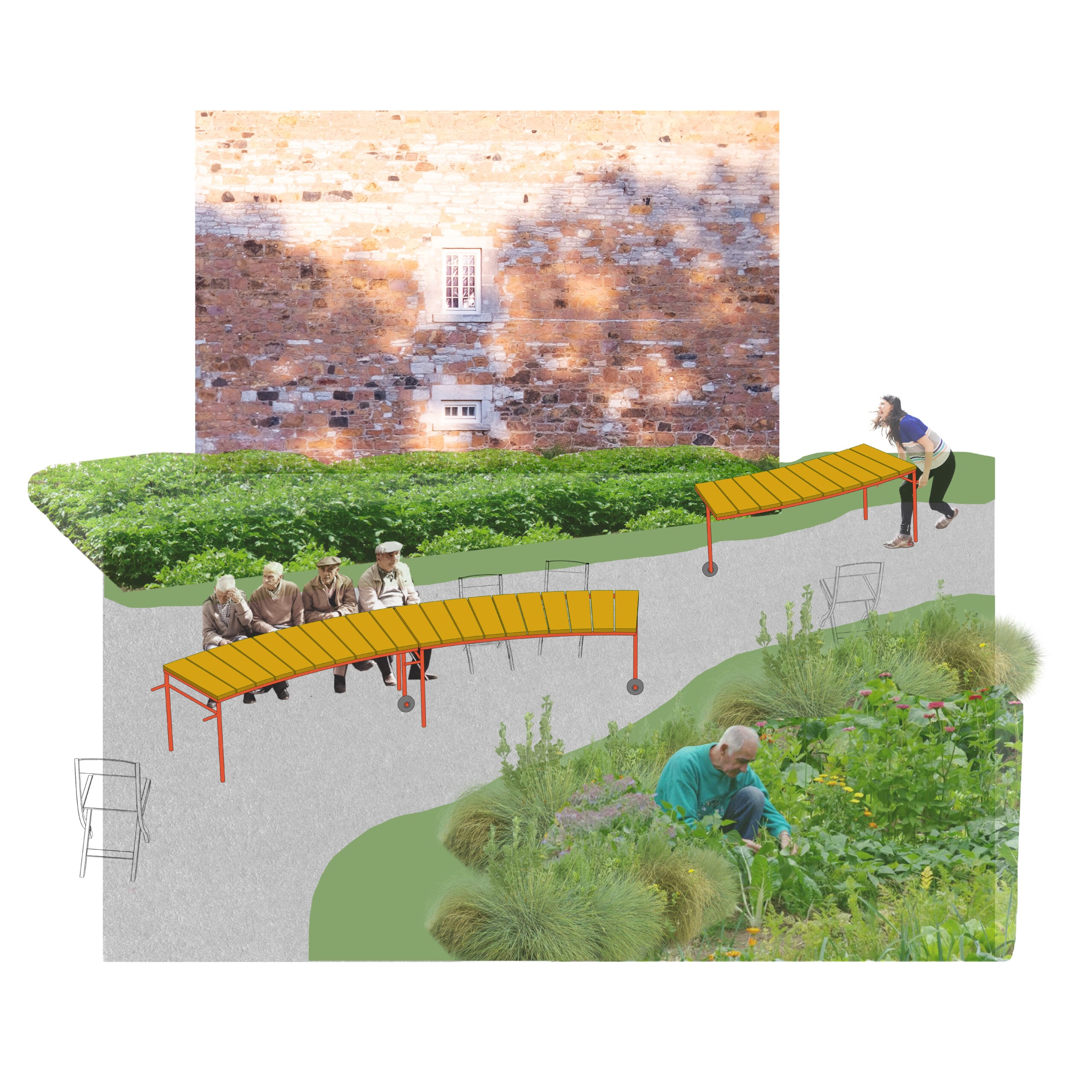
The second-prize-winning project builds on sustaining and enhancing the activities of the site’s current tenant, the Campus de la transition écologique. Julia Arvelo, Florence Barnabé and Muriel Bentolila chose to centre their intervention on the table, a symbol of gathering and sharing, and on urban agriculture, which they develop along three axes: production, processing and tasting. They propose urban gardens in the inner courtyard along with urban agriculture awareness and training workshops, a space for processing the harvest in the former fort, and a public market. Light, mobile tables, in tension with the imposing heritage building, complete the picture and invite visitors to make the site their own through its many possible configurations.
The site, its immediate surroundings and the possibilities they offered were the starting points of our thinking, along with the fact that the site already has an occupant, the Campus de la transition écologique. Its missions and areas of practice, especially urban agriculture, inspired us. That’s where the idea of the table came from. We find it a very strong symbol of gathering, conviviality and sharing, and we wanted to make it the focal point of our intervention on the site; we used it as a springboard to help people take ownership of the former fort. The tables, and the activities proposed, become an invitation to the public to discover and make this little-known place their own.
Julia Arvelo, Florence Barnabé and Muriel Bentolila, Second Prize winners
The jury appreciated how the project draws on the agri-food cycle, with each stage of production well detailed, which clearly meets a current need while contributing to the resilience of urban environments. The fact that the project speaks to a broad audience and is in line with the work and mission of the Campus de la transition écologique was also well received.
Public Prize, sponsored by the Société du parc Jean-Drapeau: “Fragment”
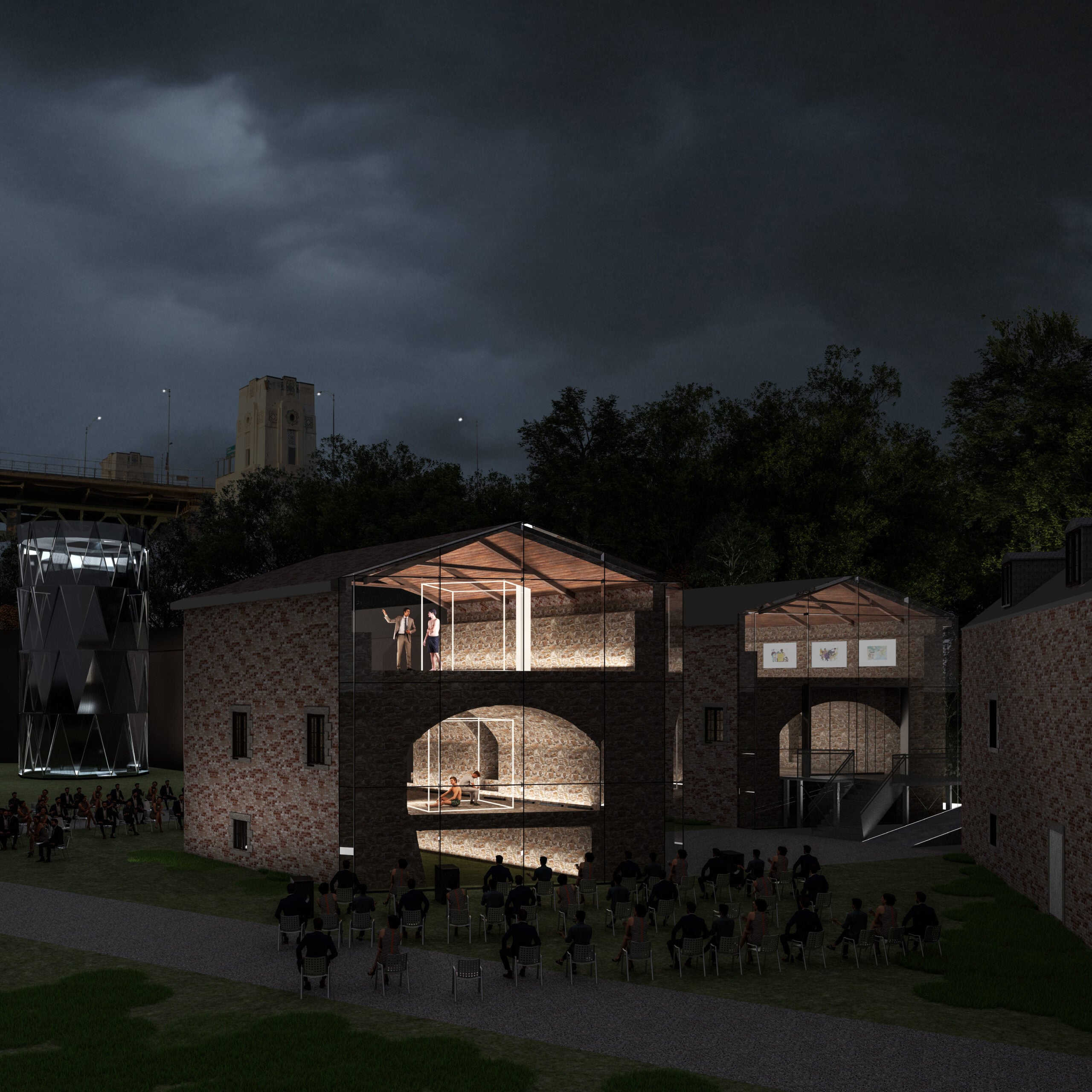
This year, we invited the public to vote for their favourite project. Just over 200 people cast a vote, and “Fragment,” by Anouk Hoffman-Morin and Jeanne Vincent, received the most votes: 75, or 35.9% of the total.
Their project is built around a bold gesture: moving a section of the former fort into the inner courtyard to turn it into a sculptural object that the public can discover from every angle, while also offering vertical stage spaces for multidisciplinary artistic presentations. With this proposal, the team aims to unsettle preconceptions about historic buildings and prompt the public to reflect on the very nature of the former fort. A collection of contemporary art by Indigenous and Inuit artists from North America in the large wing and a café opening onto the inner courtyard in the remaining wing round out the proposed uses.
The first thing that struck us was the thickness of the walls. We wanted to make it visible in ways other than just when entering or leaving the building. It’s an architectural curiosity that we wanted to highlight by cutting into the fort to reveal its structure, while also freeing an architectural object to be showcased in the inner courtyard. We also drew on the work of artist Gordon Matta-Clark, who used this type of intervention several times. Finally, since this is a competition for ideas, we decided to put forward a bold idea and carry it all the way through.
Anouk Hoffman-Morin and Jeanne Vincent, Public Prize winners
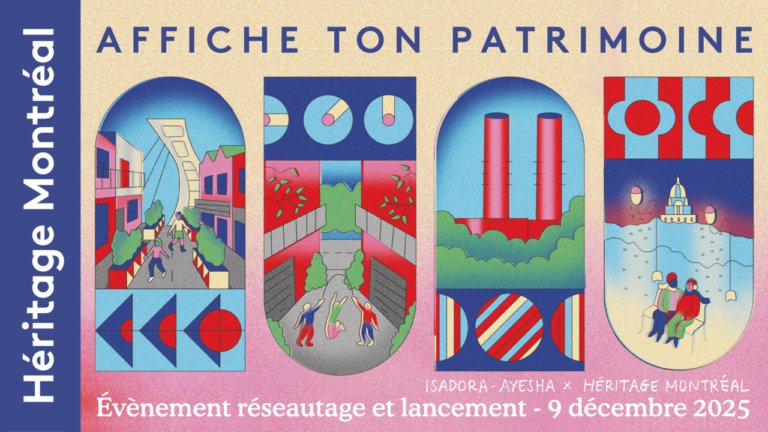
Congratulations to Myriam Deragon, Étienne René-Contant, Julia Arvelo, Florence Barnabé, Muriel Bentolila, Anouk Hoffman-Morin and Jeanne Vincent, who received, in addition to their cash prize, a poster from the 2021 “Affiche ton patrimoine” campaign created by Amélie Tourangeau.
We would also like to thank everyone who took part in this second edition of the Next Generation Committee’s Competition for Ideas, and we invite you to discover each team’s project: Juan Fernando Barrionuevo and Alexandra Gagnon-Roy; Hadi Tamim; Fabio Lima and Xavier St-Jean Labrecque; Alexander Venditti and Matthew Venditti; Maude Pilarezyk and Philippe Pilarezyk; Martin Cheffins; Jean-Simon Bissonnette.
The submitted projects were evaluated by the following jury:
- Taïka Baillargeon, Deputy Director, Policy, Héritage Montréal
- Jonathan Cha, Special Advisor, Planning, Société du parc Jean-Drapeau
- Pierre Corriveau, Partner Architect at CGA Architectes and President of the Ordre des architectes du Québec
- Frédérique Gagné-Thibault, Project Manager, Passerelles, coopérative en patrimoine
- Mélissa Mars, Interior Designer and Heritage Consultant, EVOQ Architecture
About Héritage Montréal’s Next Generation Committee
Founded in 2016, Héritage Montréal’s Next Generation Committee is made up of young volunteer experts in architecture, urban planning and heritage conservation. The committee aims to bring Montreal’s heritage to life in playful, original and engaged ways. Its activities, geared toward the next generation, seek to develop avenues for awareness, communication and exchange in order to multiply opportunities for collaboration and sharing.