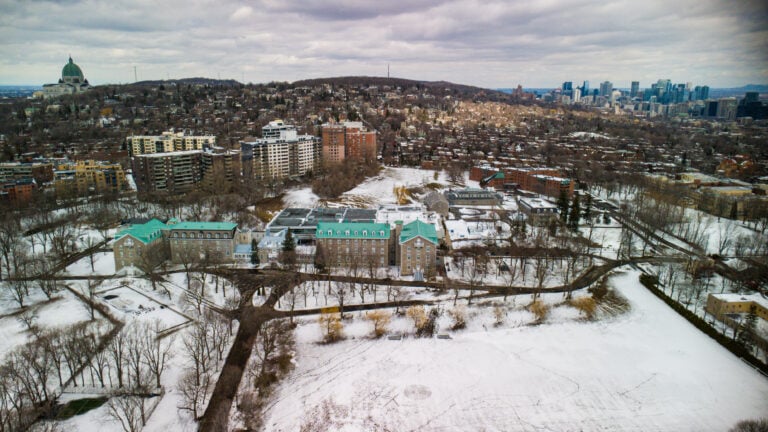
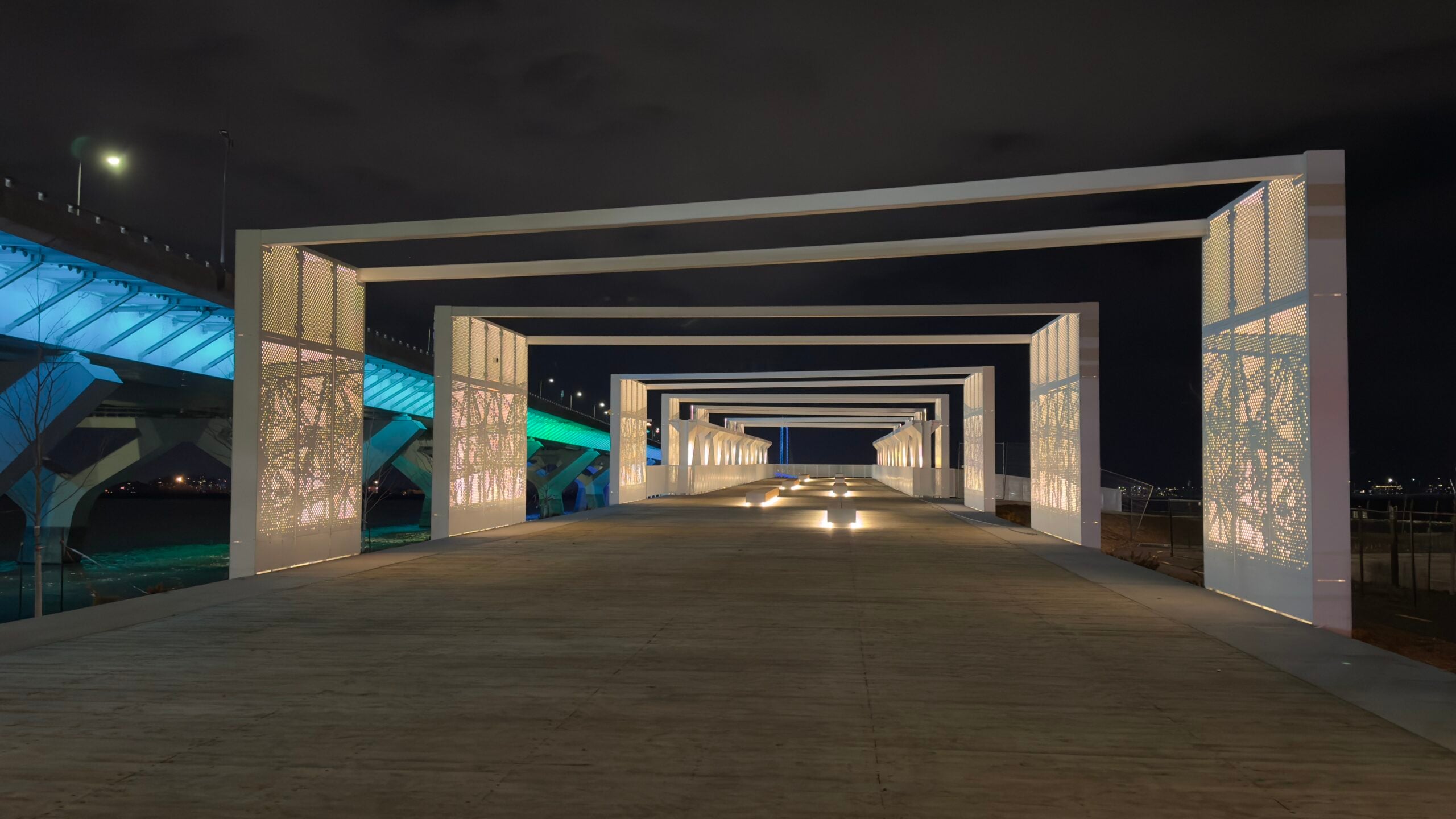
The official inauguration, on August 26, 2026, of the Héritage Champlain amenities is part of a long history. Created by Jacques Cartier and Champlain Bridges Incorporated, these rest areas on Nuns’ Island, along the St. Lawrence Seaway dike and in Brossard offer opportunities to reconnect with the St. Lawrence River through local or metropolitan walks.
Héritage Montréal commends the work of the Corporation and its professional teams, as well as their receptiveness to our request, expressed by Michel A. Tremblay, Eng., then a member of our Board of Directors and Chair of our Heritage and Planning Committee, that the major undertaking to dismantle the original 1962 bridge preserve the memory of its location and its straight alignment, which explains that of the new bridge.
Faced with the decision to replace the Champlain Bridge and launch what would become a colossal undertaking involving design, construction and dismantling, Héritage Montréal brought together professional orders and public and academic figures in 2011 to address an open letter to the federal authorities, calling on them to make the future bridge a work of engineering and architecture worthy of the St. Lawrence River. In 2013, our General Assembly adopted a resolution on the architectural quality of the new bridge and on planning initiatives in Montréal and on the South Shore to enhance its setting. Fifteen years later, without claiming that the result is perfect, we can take satisfaction in what has been achieved and acknowledge the openness of the authorities — including then-federal minister Denis Lebel, officials at Infrastructure Canada and the Corporation — to making this project a work of engineering and architecture that is as functional as it is sensitive to the landscape.
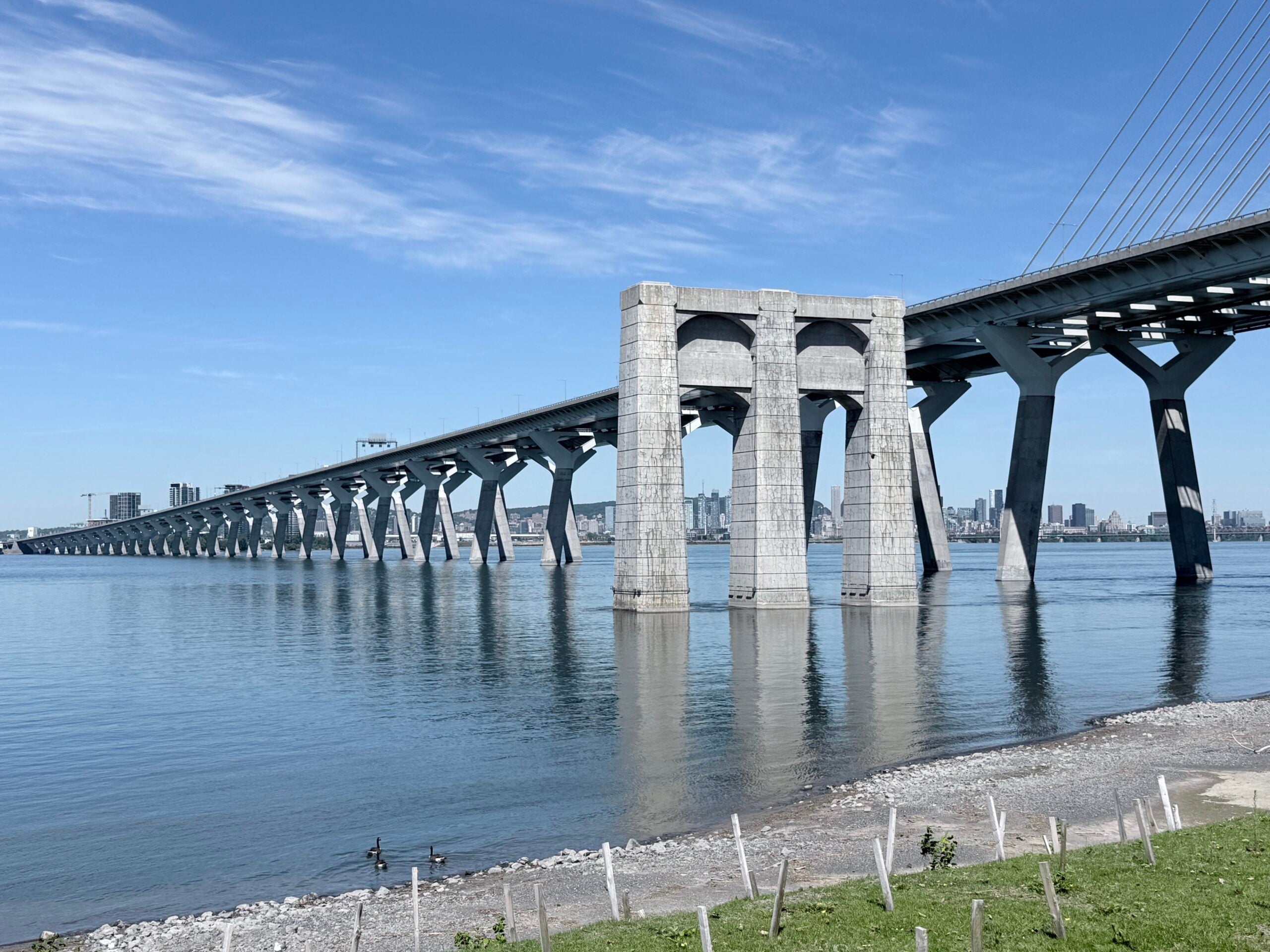
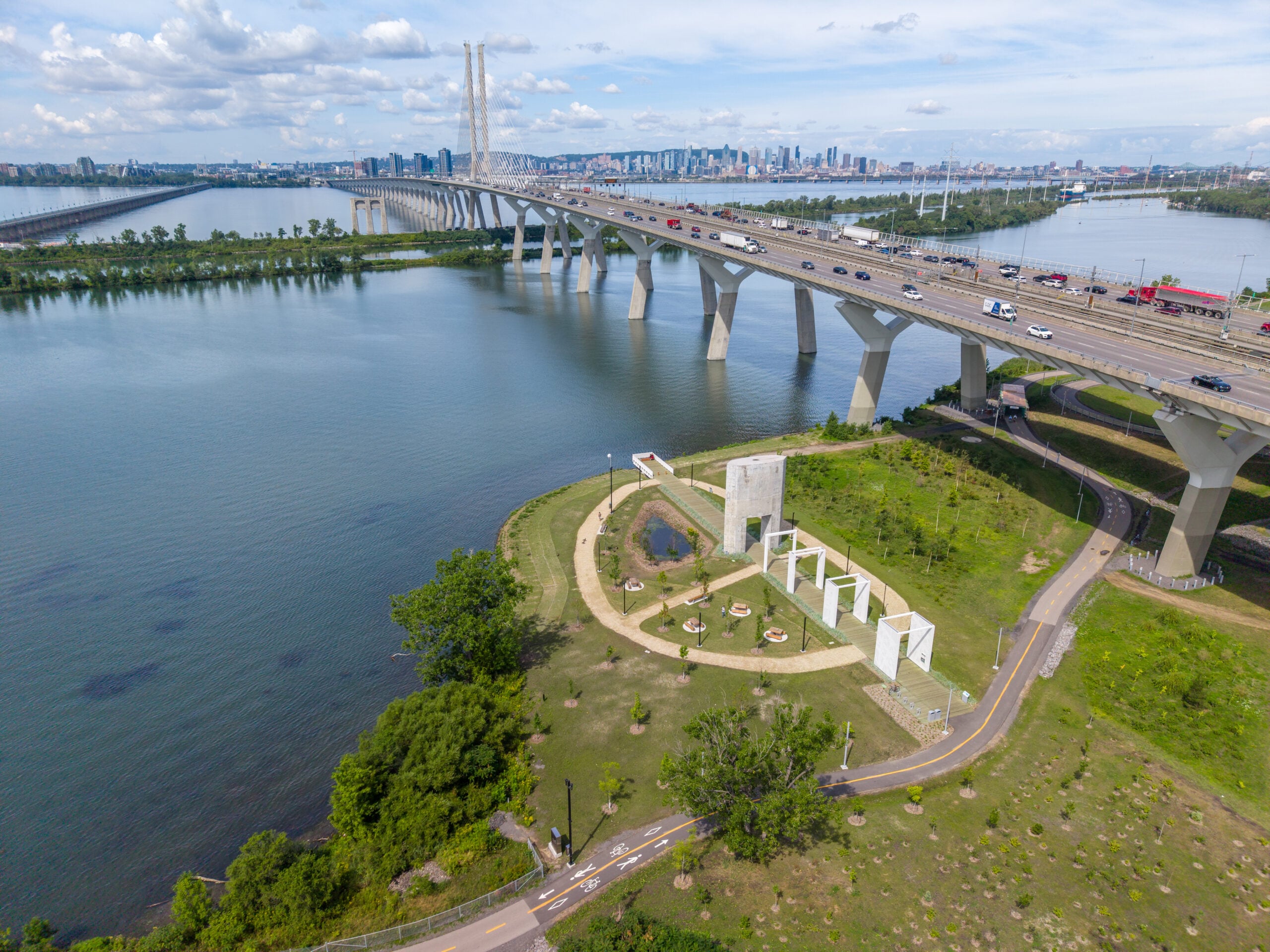
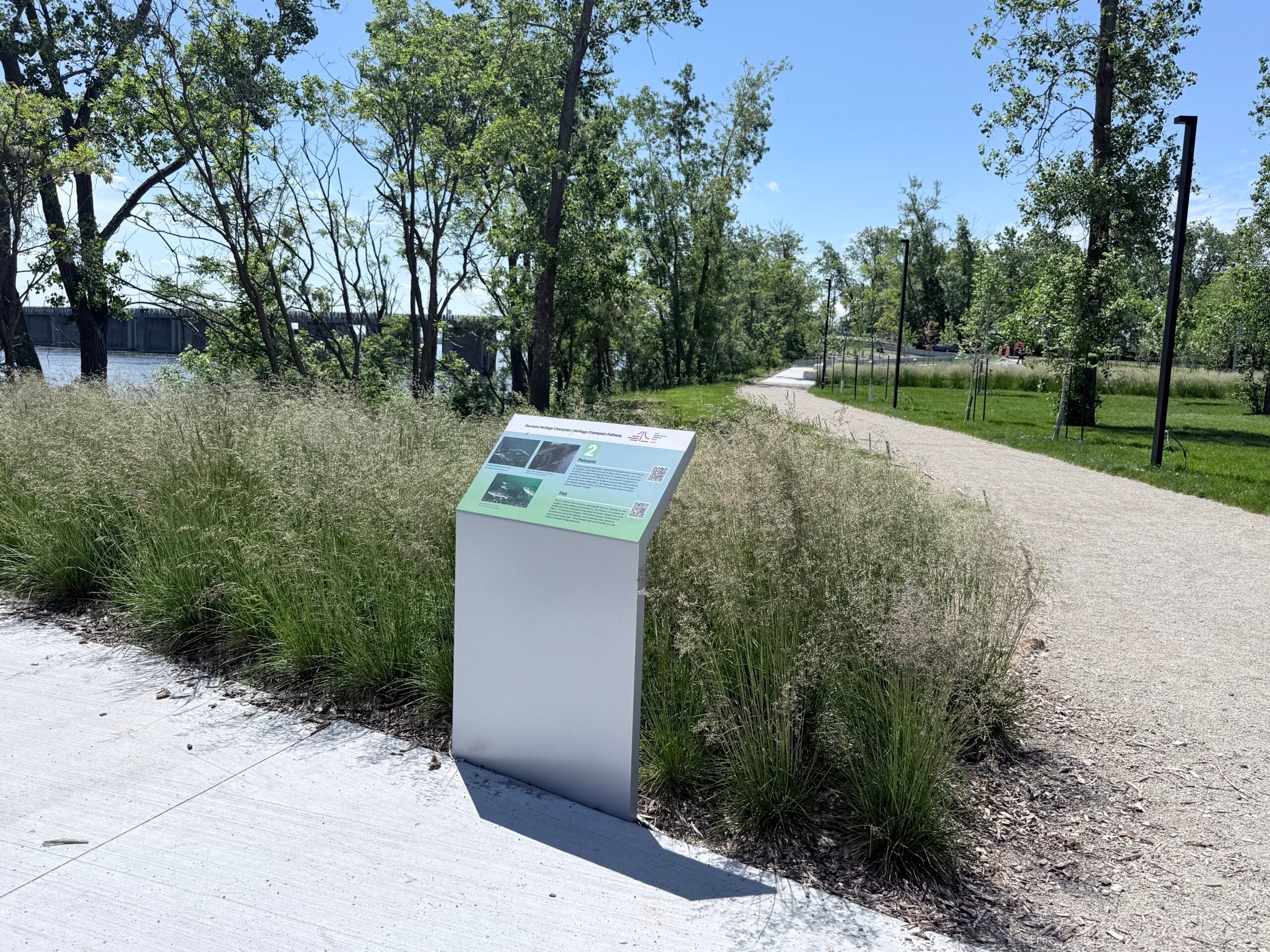
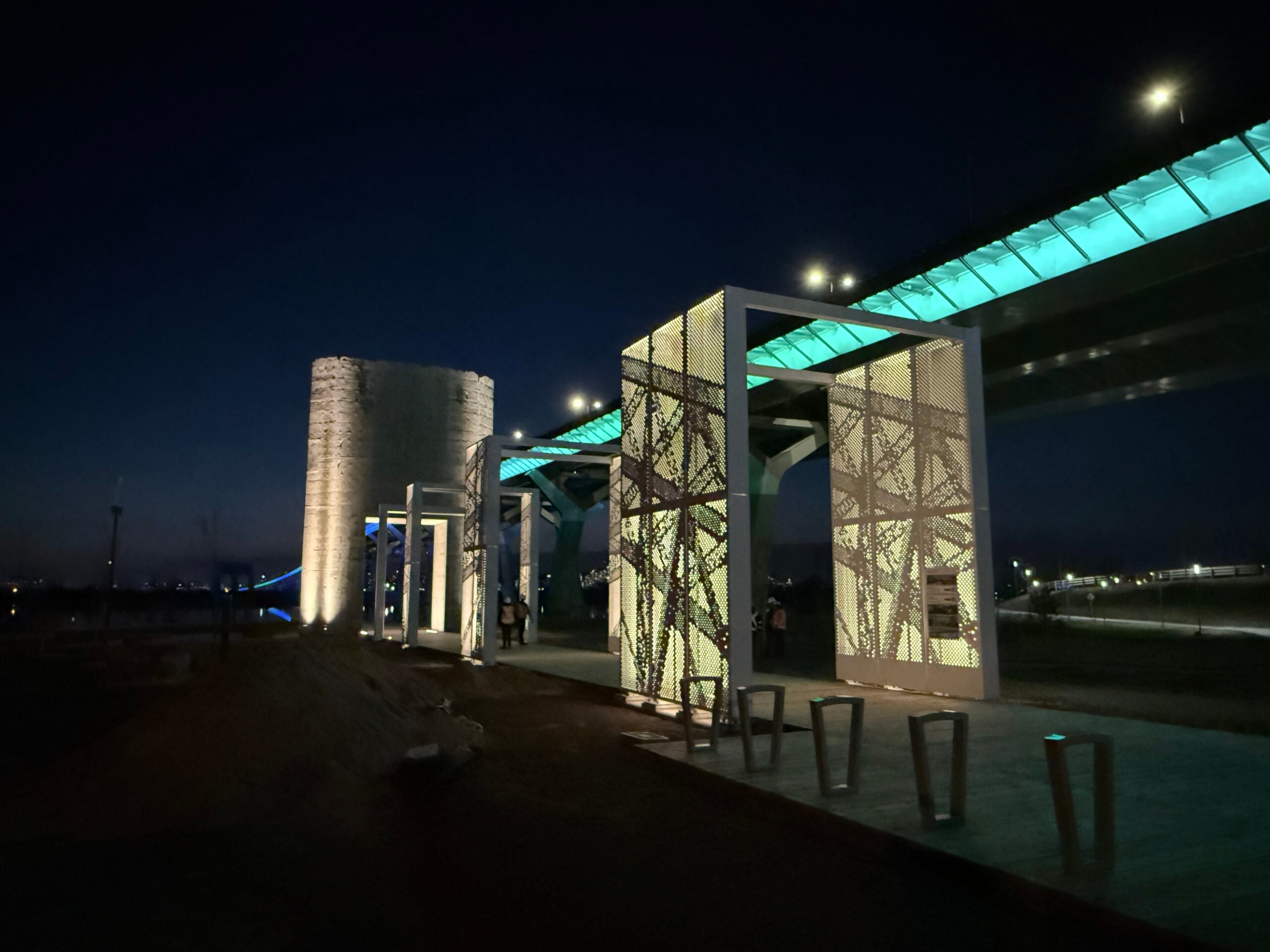
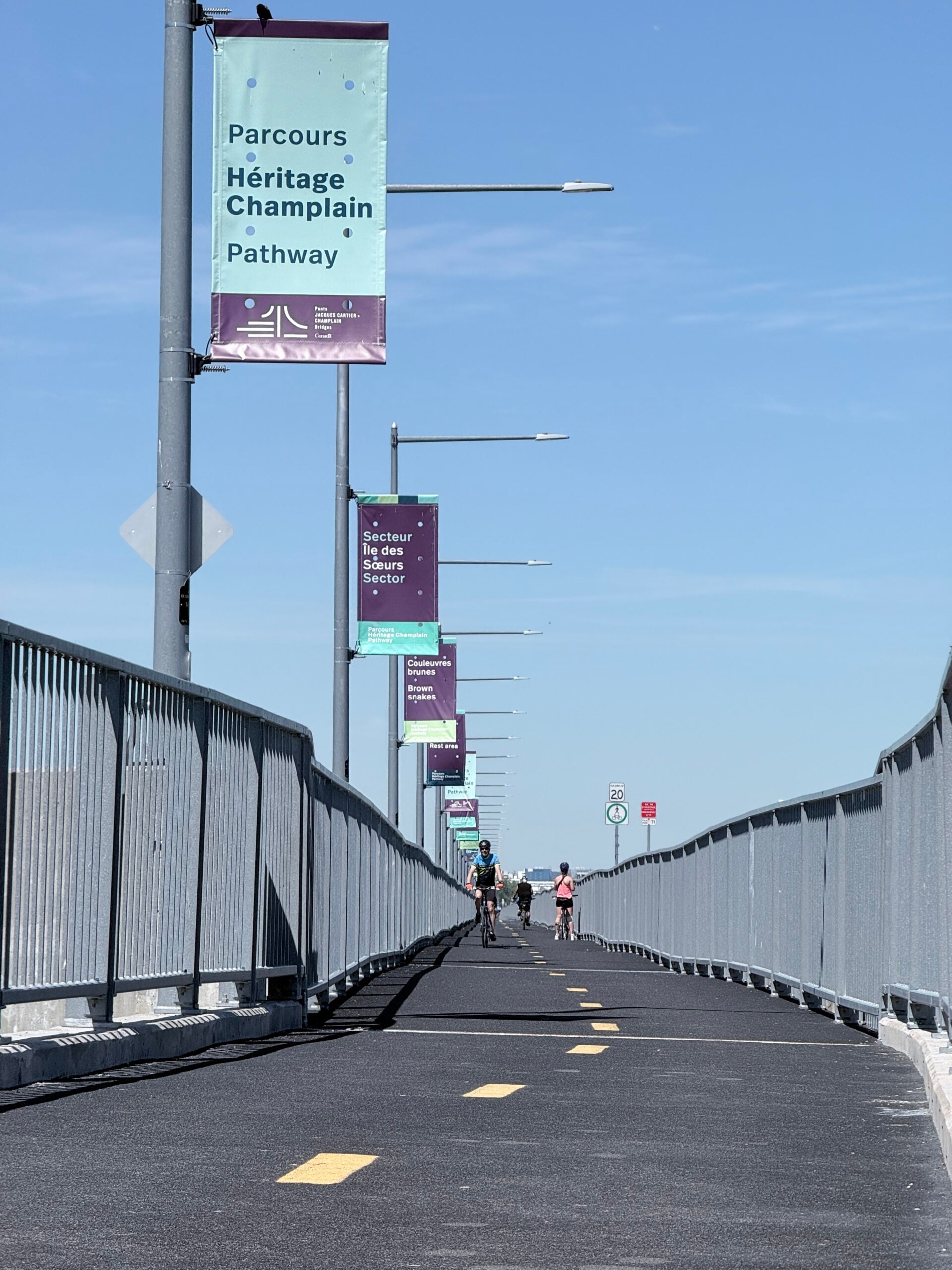
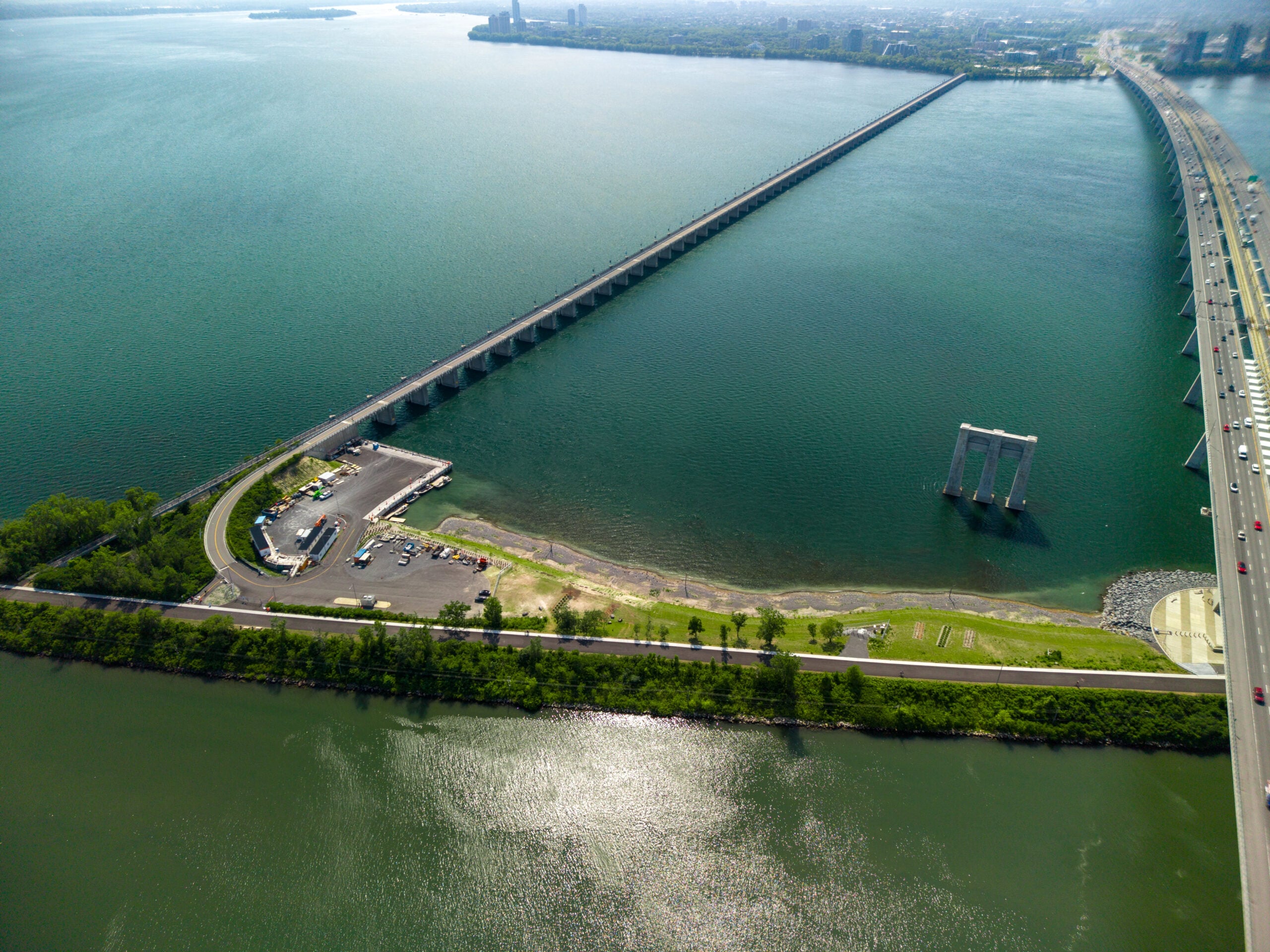
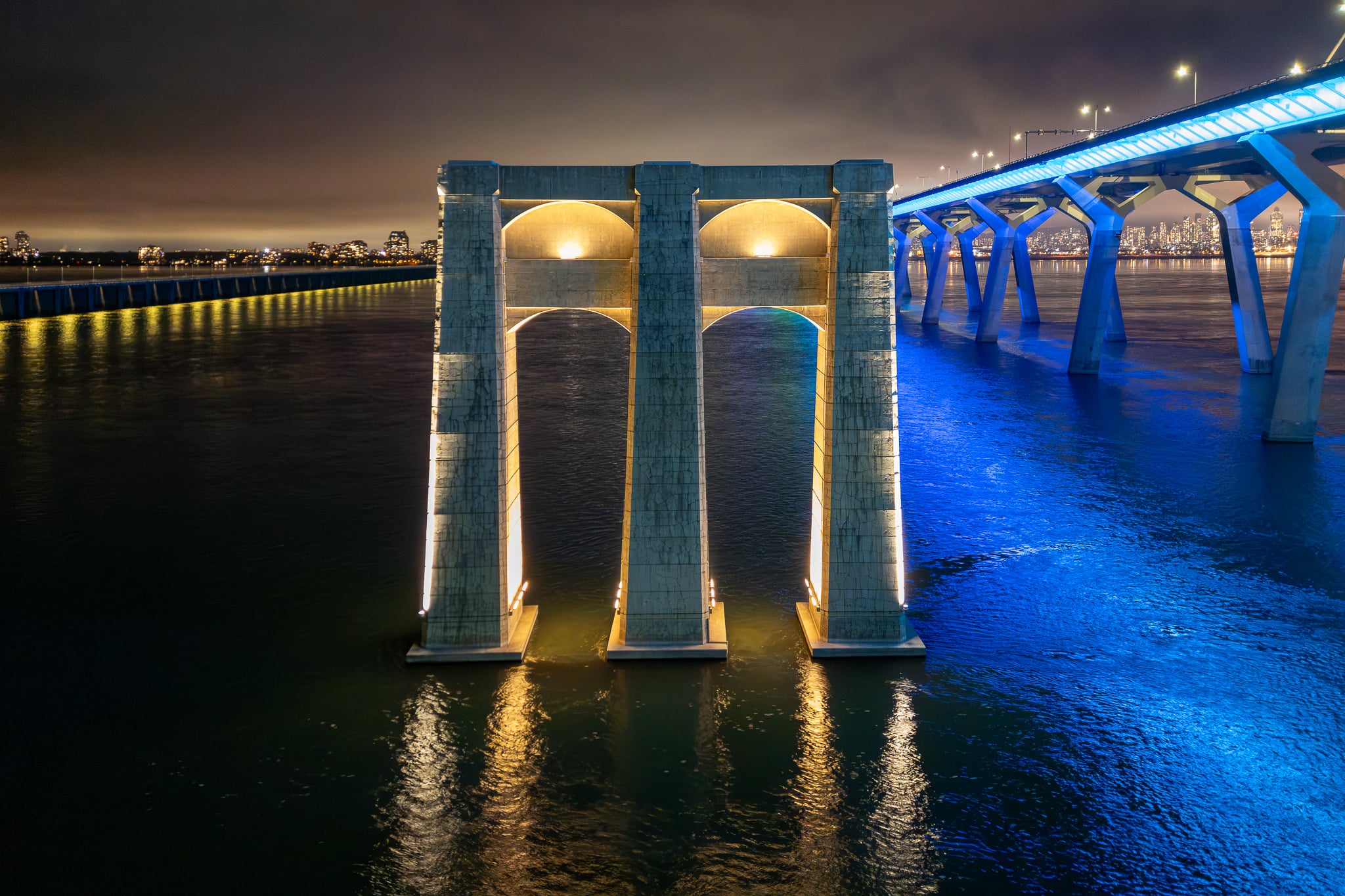
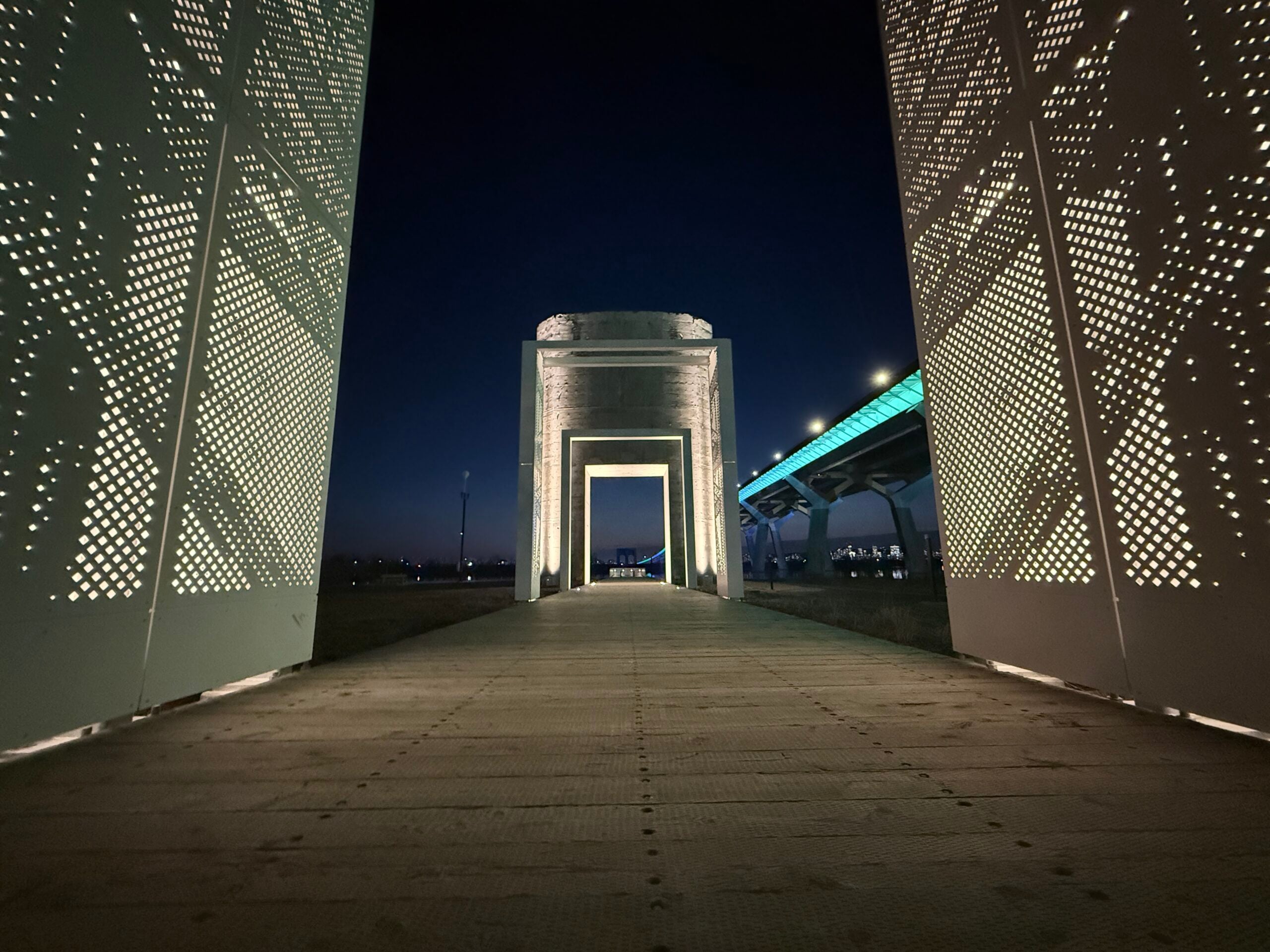
Beyond this welcome openness, it is worth highlighting several concrete decisions made by the federal organizations involved. For both the new bridge and the dismantling of the old one, they established advisory committees on which Héritage Montréal served. They also chose to engage an internationally renowned designer, Danish architect Poul Ove Jensen, and required bidders to follow his design guidelines, notably regarding the shape of the piers and pylon and the long curve of the alignment. Equally significant was the commitment to make the dismantling project exemplary in terms of scientific research, the reuse of materials, the restoration of wildlife habitats and the commemoration of the 1962 bridge.
After so many years of work, we invite the public to discover these new amenities — on Nuns’ Island, in Brossard and along the St. Lawrence Seaway dike — and to see them both as new points of access to the river and as opportunities to appreciate the new bridge and its place within this iconic landscape.