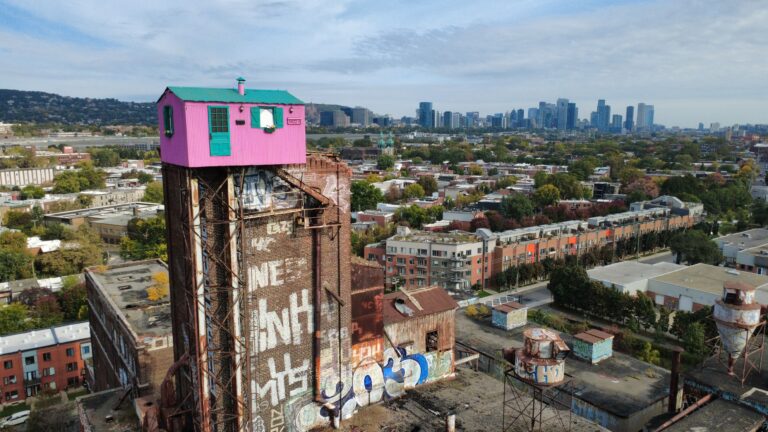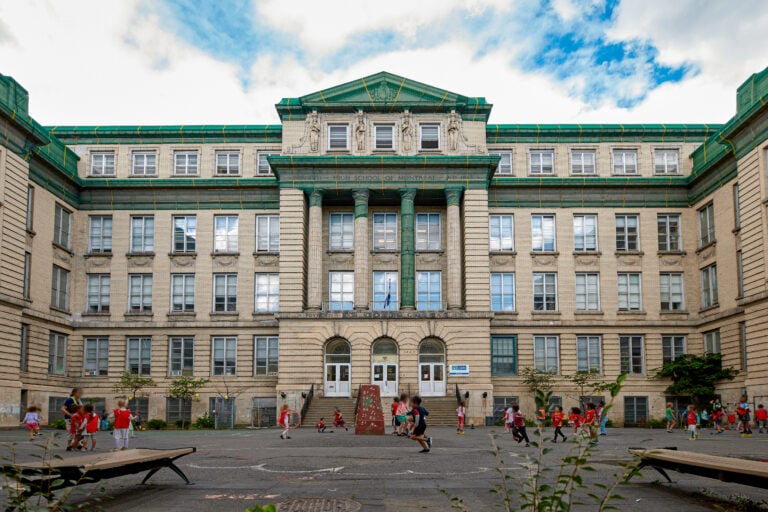
Brief by Héritage Montréal. Submitted to the Commission on Culture, Heritage and Sports. May 2021
Table of Contents
- About Héritage Montréal
- Introduction
- Subject of the Consultation
- Inventory and Characterization of Montréal’s Industrial Heritage
- Analysis of Montréal’s Industrial Heritage and Its Heritage Value
- Proposals
- Conclusion
1. About Héritage Montréal
Héritage Montréal (HM) is an independent, non-partisan organization created to “promote and encourage the protection of the historic, architectural, natural and cultural heritage of the communities of the Province of Quebec” (Letters Patent, October 15, 1975). It fulfils this mission through educational work with the public, with owners and custodians of heritage, and with professionals and public and private decision-makers. It contributes to discussions, consultations, initiatives and projects affecting built, landscape, memorial, archaeological and natural heritage, and to its protection, enhancement and enrichment.
Héritage Montréal’s actions and programs include:
- Co-organization of a first international symposium in Montréal (1983) and of exhibitions on waterfronts and the adaptive reuse of industrial buildings;
- Participation in consultations, round tables and committees on the Old Port of Montréal (since 1978);
- Requests for citation and for the creation of a historic district for the Saint-Gabriel Locks area;
- Participation in the CCA publication Canal de Lachine – Paysage industriel;
- Participation in the Lachine Canal Round Table;
- Participation in the CMM’s work on heritage ensembles for the PMAD;
- Rescue operations (Redpath, the Saint-Ambroise/Saint-Augustin black bridge, Silo No. 5, the milk bottle, the Farine Five Roses sign…);
- Participation in the working group formed by the Heritage Division three years ago to prepare this consultation;
- Participation in the working group that drafted the statement of heritage interest for the former Molson brewery;
- Participation in the Lachine-Est consultation process;
- Participation in drafting the ICOMOS–TICCIH Principles
- HMtl/Mémento platform
- Resolutions of the General Assembly
Héritage Montréal has adopted a framework of references and guidelines on enhancing heritage within urban and social development that does not serve private interests alone. Its General Assembly has thus adopted resolutions endorsing the Quebec Heritage Declaration, urging the authorities to carry out long-promised reforms, and ratifying the definitions and development principles that guide the organization in its assessment of any project.
In terms of heritage, Héritage Montréal is primarily concerned with heritage that contributes to the human and cultural dimension of living urban space – remarkable or modest buildings, works of art or civil engineering, remnants from all periods, neighbourhoods, and ensembles such as Old Montréal, the Lachine Canal, Mount Royal, Saint-Laurent Boulevard and the archipelago. In terms of development, the organization seeks to ensure that every project strives to contribute to the enjoyment of current users and to a heritage that the next generation, 25 years from now, will be proud of. Together, these form the following table, which serves as the basis for this commentary.
| The 5 heritage dimensions associated with the city’s living places | The 5 principles of excellence in urban development |
|---|---|
| The built (buildings, landscaping, engineering structures, public art…) | Relevance and admissibility of the project |
| The landscape (scale, character of streets, characteristic features, built landmarks, views, topography…) | Consideration of heritage and urban context |
| The memorial (place names, uses, traditions, significant events, know-how, rituals, associations…) | Exemplary process of design, evaluation and implementation |
| The archaeological (traces in the ground or in buildings bearing witness to human activity or presence…) | Innovation and creativity demonstrated in the project and its execution |
| The natural (geology, hydrographic network, flora, fauna, natural monuments…) | Sustainability, short-, medium- and long-term impact, and contribution to the heritage of the next generation |
This brief was prepared under the responsibility of the Heritage and Planning Committee (COPA), taking into account the organization’s reflections, positions and proposals on heritage, planning and the processes by which the public participates in decisions affecting the urban and human environment in its historical, architectural, cultural and identity-related dimensions
2. Introduction
The public consultation addressed in this brief concerns guidelines under study to better conserve and enhance Montréal’s industrial ensembles of heritage interest as part of the development of the 2050 Urban Planning and Mobility Plan. These guidelines are set out in the document Ensembles industriels d’intérêt patrimonial – orientations proposées (Industrial Ensembles of Heritage Interest – Proposed Guidelines), accompanied by a document of 46 fact sheets and an interactive map presenting as many ensembles identified as exceptional by the municipal departments responsible for this work.
While Héritage Montréal regrets the loss and deterioration of many major industrial ensembles and buildings caused by a certain inertia regarding the safeguarding and preservation of industrial heritage, we are pleased today to take part in this long-awaited consultation, anticipated since the adoption of the Montréal Agglomeration Land Use and Development Plan in 2015. We also wish to acknowledge the work accomplished by the Heritage Division and the Commission on Culture, Heritage and Sports in the course of these consultations, and we hope it will be followed by concrete measures.
We note in passing that this work is based in particular on the Joint ICOMOS–TICCIH Principles for the Conservation of Industrial Heritage Sites, Structures, Areas and Landscapes, adopted in Dublin in 2011, which Héritage Montréal also endorses. We believe that these four principles (set out below) should likewise be central to the implementation of enhancement and redevelopment operations for Montréal’s ensembles of heritage interest.
- Document and understand industrial structures, sites, areas and landscapes and their heritage values;
- Ensure effective protection and conservation of industrial heritage structures, sites, areas and landscapes;
- Conserve industrial heritage structures, sites, areas and landscapes;
- Present and communicate the heritage values of industrial structures, sites, areas and landscapes to raise public and corporate awareness and support education and research (ICOMOS–TICCIH, 2011).
3. Subject of the Consultation
The public consultation concerns guidelines under study to better conserve and enhance Montréal’s industrial ensembles of heritage interest, presented in the document Ensembles industriels d’intérêt patrimonial – orientations proposées.
To begin with, the proposed definition of such ensembles is as follows:
Particularly complex groupings of industrial buildings, civil engineering structures, machinery, instruments, tools and various equipment belonging to one or more companies (Montréal Land Use and Development Plan, 2015, p. 75).
Given the nature of the subject, rightly recognized by the City as fundamental to Montréal’s identity, it would seem relevant from the outset to specify what is meant by “industrial ensembles” in the context of this consultation. Logically, this term does not include civil engineering works such as bridges, or public technical facilities such as incinerators. Likewise, while we understand the prioritization of large industrial ensembles set apart from the urban fabric over stand-alone structures or those better integrated into neighbourhoods – one has to start somewhere! – it seems necessary to explain why. The selection criteria for the ensembles should also be detailed, explained and shared. Admittedly, some exclusions are partly explained on pp. 7 and 8 of the document Ensembles industriels d’intérêt patrimonial – orientations proposées, but the picture remains incomplete. In particular, we would like to know what other initiatives are under way or being considered and how they fit with the process addressed in this consultation. Similarly, the purpose of the exercise deserves to be made more explicit. What is the objective of these consultations, and what are the next steps and target timelines? It is essential and urgent that the City adopt a coherent vision for industrial heritage in general and for these large ensembles in particular.
Among the criteria needing clarification are that of being “set apart from the urban fabric” and a reading of the territory that focuses essentially on the southern part of the agglomeration, thereby excluding large, more recent concentrations such as those in Parc-Extension, Chabanel/Port-Royal or the Borough of Saint-Laurent. Moreover, while the link with marine or rail transportation is important, the link with energy corridors, the road network or, for nearly a century, air and even seaplane transportation should not be overlooked.
At the same time, it would be useful to release the full list of industrial ensembles of interest identified in the context of this consultation. Although 164 ensembles were considered, only the 46 deemed to be of exceptional interest, as determined by an internal committee, are presented. Releasing them all would help better inform citizens and raise their awareness of the nature and importance of our industrial heritage.
Finally, Héritage Montréal notes that the heritage of the East End of the island, although shown on the interactive map, does not appear in the document of 46 fact sheets. Even if the scope is limited to the City of Montréal (which excludes Montréal-Est), there should be a fact sheet on the industrial territory of Pointe-aux-Trembles.
4. Inventory and Characterization of Montréal’s Industrial Heritage
Characterizing a set of objects requires identifying criteria that lead to the development of a typology (as is the case, for example, with Montréal’s residential building types). Some criteria are already identified, formally or not, in the consultation document, notably in the proposed definition and, above all, in the summary characteristics of the selected ensembles (p. 4): large sites, often difficult to access and set apart from the urban fabric; urban landmarks; existing links with rail and marine transportation; mineral landscaping; presence of vacant land; contamination; industries that are operating as well as abandoned or with temporary uses; and, finally, both public and private ownership. However, a typology of the ensembles and of the structures within them has yet to be developed. Large industrial ensembles often include several infrastructures of very different forms that cannot lend themselves to every type of use. A comprehensive typology of industrial ensembles and buildings therefore seems necessary to develop an overall vision as well as specific redevelopment proposals. All 164 ensembles considered should be included in building the suggested typology.
In addition to the criteria presented on page 4, the following elements could be considered in developing this typology:
- Period of construction, year of additions, etc.;
- Part of a network (e.g., Lachine Canal, railway, etc.) versus isolated;
- Spatial organization: “main” building (with a street address) and “accessory” buildings, or a true campus (is there a master plan? Are there internal networks?);
- Form: atypical buildings (large halls, silos, chimneys, machine-buildings, etc.) vs. more conventional urban buildings (implying: more easily redeveloped for various “urban” purposes);
- Function and uses: notably storage vs. production.
Such a typology would certainly facilitate the rest of the process, notably by helping to clarify and prioritize the issues. In a context where the redevelopment of some of these large ensembles is openly sought, an assessment of current conditions would also be necessary (contamination, deterioration, state of conservation, etc.). The place itself should be the starting point of any redevelopment project. Rather than trying to fit a project into a space that would hardly be suitable, we believe it is important to favour projects designed specifically for particular spaces, especially when dealing with highly atypical spaces and volumes.
5. Analysis of Montréal’s Industrial Heritage and Its Heritage Value
The proposed analysis addresses the issues and heritage values of Montréal’s industrial heritage.
5.1. Issues
The issues are largely presented according to current activities: is the building still in operation or awaiting redevelopment? This distinction is indeed important, as the two situations call for different conservation strategies. However, the analysis should avoid being too compartmentalized. An ensemble might, for example, be only partially in use (as is the case with the Carrières service yard and its vacant incinerator). An ensemble still in operation could also quickly become an abandoned property. Without, of course, being able to predict the future, it might be useful to include this possibility among the issues and to explore conversion potential in this regard.
It would also be relevant to link these issues to the proposed typological exercise, which would certainly help develop them and better frame the future. Finally, in both cases, the issues are not only “negative.” The literature on vacant industrial heritage clearly shows that these spaces often become hubs of innovation and community-building. For example, with deindustrialization, many abandoned industrial sectors or ensembles have become spaces of non-conformity and informal appropriation. They should therefore be considered and presented as potential assets for the city’s development. In contexts of informal appropriation, it may also be worthwhile to collaborate with the citizens involved. Vacant sites may appear neglected, but they sometimes become places of identity or socialization, and reinvestment, even informal, can contribute to revitalizing an area. It would therefore surely be useful to translate these possibilities into potential, highlighting the obstacles to be overcome.
5.2. Heritage Values
Some heritage values are already identified in the guidelines document (p. 15). The typological exercise still to be done should help identify others. For example, beyond the formal and spatial quality of the ensembles, it would be worthwhile to recognize the know-how associated with industrialization and, in this way, the intangible value of the sites under study. It would also be relevant to include landscape value since, as noted in the consultation documents, industrial heritage very often constitutes an urban landmark at the local or even regional scale. In this regard, while most of these vacant ensembles will need to find new uses, some may remain vacant, either pending a redevelopment project or because a decision has been made to turn them into urban ruins. This latter option has been very successful in some highly industrialized regions, notably the Ruhr Valley in Germany; it should not be dismissed out of hand.
Landschaftspark Duisburg Nord source: © Diadis/dreamstime.com
The proposed collaborative planning exercise, including the preparation of a statement of heritage interest, will make it possible to continue this exercise of identifying values and adapting them to the various ensembles. In this respect, Héritage Montréal suggests clarifying what is meant by the notion of connection with neighbourhoods, since the presentation of the characteristics of the ensembles of interest (p. 4) describes them as “often difficult to access and set apart from the surrounding urban fabric.”
6. Proposals
6.1. Vision
The vision is generous and all-encompassing, covering everything that could be described as industrial heritage. It might be useful to focus it on the industrial heritage selected, without necessarily abandoning the broad vision proposed. A broad vision that in practice targets only certain specific sites could give the impression of an overall, coherent approach to Montréal’s industrial heritage in general, which is not the case. The notion of being rooted in the daily life of neighbourhoods, for example, does not seem to apply to most of the ensembles under study, as we noted earlier.
6.2. Approach
Héritage Montréal fully supports the approach of collaborative planning and citizen participation (p. 17). Given the difficulty of accessing some sites and the types of current occupancy, particularly in buildings and ensembles in operation but also in vacant ones, the challenge nonetheless appears considerable. Such a commitment will require properly equipping the various stakeholders, notably (but not only) to implement proposals 1 and 3 (pp. 21 and 24) concerning the production of historical documentation and of a statement of heritage interest and guidelines prior to any intervention, a proposal that Héritage Montréal welcomes.
Since any collaborative process requires information sharing, Héritage Montréal insists that existing information, both on the buildings and ensembles and on their heritage values, be disseminated as widely as possible. Furthermore, it would be relevant for this collaboration to also be informed by citizen experience and by formal, informal and memorial knowledge, which would thereby enrich scientific and/or technical knowledge.
Héritage Montréal of course supports the continued identification of ensembles of exceptional interest (proposal 2, p. 23) and welcomes the work already done through the 46 fact sheets presented in the context of these consultations. However, we are of the view that this process should be more transparent, notably with respect to the selection criteria for these ensembles. To raise citizens’ awareness of the importance and value of industrial heritage, it would also be relevant to expand the fact sheets to provide more detail on the history and memory of the sites, the value and quality of the buildings, etc.
Likewise, while the “identity landscapes” approach of this exercise is interesting and will be very useful for a land-use planning tool such as the future Urban Planning and Mobility Plan, it would be just as useful to take into account the historical, technological and social value of these ensembles. We therefore propose that vacant and redeveloped industrial ensembles of interest serve not only as landmarks in the landscape, but as a legacy to be shared with the entire population through public access to the ensembles and the introduction of interpretation highlighting the history of the sites, their social symbolism or their innovative importance, whether architectural or technological. We must be able to recognize the value of an ensemble of ordinary-looking buildings lacking a chimney, water tower or other signature element in the landscape, but which might, for example, bear witness to a major invention, to Montréal’s participation in the war effort, or to the launch of a large-scale commercial enterprise such as the telephone in the 19th century or pharmaceuticals in the 20th. This exercise in revaluing industrial ensembles should therefore be accompanied by a solid communications plan and high-quality signage, so that these places of ingenuity can be made more accessible, showcased and celebrated through landscaping and design that respect what is already there.
Proposal 3 (p. 24) concerning the social acceptability of projects seems interesting but would benefit from clarification. In particular, why should social acceptability be limited to ensembles of exceptional value? Moreover, while consultation can indeed foster a degree of social acceptability, it can also give rise to conflict. Above all, let us remember that it is a tool for learning citizens’ views, thereby enabling them to contribute to shaping their living environment.
Héritage Montréal also supports the proposal to adopt a transitional urbanism approach for certain under-occupied or vacant exceptional ensembles owned by the City of Montréal. Research on built heritage conservation very often shows that the best way to preserve a place is to occupy it. In this respect, it could be relevant to consider and plan a program of rapid, even if temporary, occupancy of certain buildings and ensembles still in operation in order to ensure the proper functioning of the sites, ahead of any closures. It would also be relevant to better distinguish ephemeral – or temporary – urbanism from transitional urbanism. These two forms of occupancy (one aiming at a provisional investment, the other at establishing a permanent project) are very promising avenues for the redevelopment of industrial ensembles, but they are quite distinct practices with different impacts and potential. Although these practices originally stemmed from informal citizen occupations, they are now increasingly popular urban planning tools for cities, particularly those facing significant vacancy problems. Thus, while we understand that the City cannot vouch for buildings it does not own, we believe that temporary and transitional urbanism should be encouraged and facilitated in both public and private buildings, and considered a tool for countering vacancy and minimizing its impact on surrounding areas.
Beyond redevelopment through transitional uses, Héritage Montréal suggests exploring and documenting compatible uses that maximize the integrity and authenticity of the sites while respecting the spirit of place, especially – but not only – in the case of sites of exceptional value. In this regard, we believe that industrial or related activities, for example manufacturing 2.0 uses (following the example of Detroit), but also artists’ and artisans’ studios, should be given priority. These uses have many advantages, notably in that they preserve places of employment, but also because they very often prove to be the uses most compatible with industrial ensembles.
To identify compatible uses as effectively as possible, Héritage Montréal also suggests taking advantage of the opportunity offered by this overall exercise to develop the heritage impact assessment as a tool. Complementary to the evaluation of heritage interest, such an assessment would provide a better understanding of the changes a project would bring and of the effects it is likely to have on the heritage concerned, and thus make it possible to evaluate whether and how negative impacts can be avoided, reduced or even offset. Furthermore, the often extraordinary typology and volumes of industrial ensembles cannot lend themselves to every form of use. It would therefore be relevant for redevelopment projects to be designed based on the available spaces, and not the other way around. For this reason, we recommend that a comprehensive inventory of vacant buildings and ensembles, including their condition and typology, be carried out and made available to the public.
As for the unusual but essential structures found in these large industrial ensembles, such as chimneys, water towers, pylons, overhead cranes and signs, Héritage Montréal believes they deserve specific treatment and actions. In these cases, the discussion of uses that is so important and familiar in urban planning becomes less relevant, and yet it is imperative that these structures be preserved and showcased.
Héritage Montréal considers it important to identify the stakeholders and their roles now, both for municipal properties and for other properties. It has in mind, in particular, the City’s Real Estate Management and Planning Department in the case of municipal buildings, and the boroughs, which are the first to act on the protection of buildings on their territory. Innovation will also be needed in implementation tools to support the boroughs, as well as current and prospective occupants, especially those lacking the necessary resources: refining urban planning regulations, certainly, but also developing incentives, land strategies and partnerships, particularly with a view to maintaining places of employment. And finally, why not an “Industrial Revitalization Commissioner”?
Lastly, Héritage Montréal believes that a citation strategy should be included in the current exercise and implemented quickly so as to maximize the protection of these ensembles.
7. Conclusion
In conclusion, Héritage Montréal believes that built and landscape heritage is at the heart of citizens’ quality of life. By preserving properties and sites of heritage interest, which are sources of the identity and character of neighbourhoods and cities, we not only ensure that these living environments remain vibrant and attractive, but also create real cultural, social, ecological and economic value.
Montréal’s industrial heritage has long been mistreated, and it is high time this was remedied. Héritage Montréal therefore welcomes the proposed initiative concerning industrial ensembles of exceptional heritage interest and hopes it will be tied to a genuine vision placing industrial heritage at the heart of a comprehensive, cross-cutting strategy that explicitly recognizes the importance of its maintenance, protection, enhancement and redevelopment.
It will be imperative to accompany this vision with a coherent regulatory and financial framework that meets ambitious objectives for maintaining and enhancing these valuable assets and strikes a judicious balance between coercive and incentive-based approaches. This coherent regulatory and financial framework must necessarily be supported by:
- Knowledge;
- Awareness and education;
- Professional and technical expertise;
- Incentives;
- consultation mechanisms;
- Legal tools for protection and enhancement;
- Support.
Finally, Héritage Montréal offers its full cooperation to the commissioners of this commission, as well as to the municipal departments and the owners of the industrial ensembles concerned by this consultation.